
Kandil Simidi (Turkish Sesame Ring Cookies) – Exact Measurements, Smells Amazing, Keeps for Days
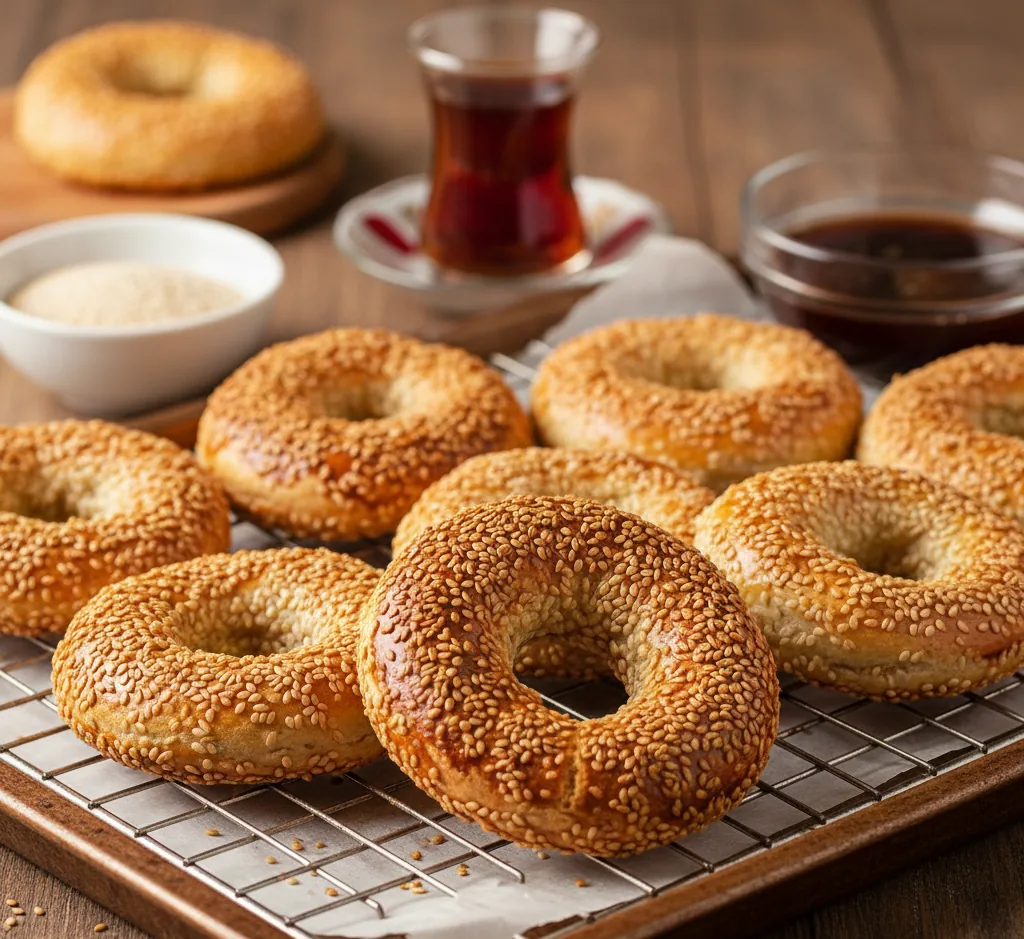
Kandil simidi is hard to pin down to one place, as in “it first appeared in this exact city,” because it is a cultural food that took shape and spread along with the Ottoman-era tradition of offering and sharing food on kandil nights. Many sources describe how the simidi made for kandil nights was inspired by the simit and çörek traditions of the Ottoman palace and, over time, gained its own flavor and shape. The original intention was to offer it to neighbors and to those in need on these blessed nights. So kandil simidi is more than a snack; it is like the idea that “blessings grow as you share,” coming fresh out of the oven.
The spread of the phrase “kandil night” is also linked to the lighting of mosques with oil lamps (kandil) in the Ottoman era. Some accounts say the custom of marking these nights in Istanbul with communal worship and charity grew stronger during and after the reign of Selim II (1566–1574). Kandil simidi is said to have become especially visible and widespread in Istanbul, with its bakery and pastry culture, and some sources say that in the 1800s Istanbul bakeries increased their production for kandil nights, which gave today’s “classic kandil simidi” a more distinct identity. In short, its roots lie in the Ottoman kandil nights and the tradition of offering food, and its timing is centered around those blessed nights: Regaib, Miraç, Berat, Mevlid and Kadir.
A Few Notes on Enjoying Kandil Simidi
Enjoyed in moderation, kandil simidi is a little everyday joy to have next to your tea. When you make it at home, you know exactly what goes into it, and you can control the butter and salt yourself, which is nice when you are baking for guests and neighbors. Since it is made with flour and butter, it is a rich treat, so I find one or two at a time is the most balanced way to enjoy it.
This content is for general information only and is not medical advice.
I hope it leaves you with a lovely memory!
Kandil Simidi (Turkish Sesame Ring Cookies) – Exact Measurements, Smells Amazing, Keeps for Days
Ingredients
Yapılışı
- Heat the oven to 170°C (340°F), top and bottom heat. Line a baking tray with parchment paper so we don’t have to fuss with it later.
- Put the butter, olive oil, yogurt, vinegar and pekmez into a large bowl. Mix it all together well; right at this moment you already get that “yes, this dough is going to be crisp” feeling. 😊
- Flavor touches
- Add the salt, mahleb and baking soda. Mahleb is what gives kandil simidi that “bakery-like” aroma, so please don’t skip it.
- Don’t dump the flour in all at once; add it a little at a time as you knead. The dough should be soft but not sticking to your hands. If we make it stiff, the simit won’t be crisp, just a bit dry, and we don’t want that. 🙃
- Pinch off pieces of dough smaller than a walnut, roll each one in your palm into a thin, long rope, then join the ends to make a ring. (By now the kitchen is already in full “kandil evening” mood.)
- In a small bowl, mix 1 tablespoon pekmez with 3 tablespoons water. Dip the rings in this first, then coat them in sesame seeds and arrange them on the tray. This way the sesame sticks better and the color comes out beautiful.
- Put the tray in the oven and bake for 20–25 minutes. They’re done when the tops turn lightly golden and the sesame seeds start to smell wonderful.
- When they come out of the oven, let them rest on the tray for 5 minutes, then move them to a wire rack if you like. Serve them with tea, and then, like me, say “let me share them before they go stale” and set a plate aside for a neighbor… that’s exactly how the blessing of kandil grows 🤍😊
Püf Noktaları
⭐ Did you try this recipe? Rate it with stars below and tell us how it turned out; your comment will help other readers too.
You May Also Like
- Aunt Emel’s Little Sesame Simit (Mini Turkish Sesame Rings)
- İzmir-Style Lokma Recipe (Savory Turkish Fried Dough Bites)
- Elmalı Kurabiye (Turkish Apple Cinnamon Cookies) Recipe
Frequently Asked Questions About Kandil Simidi
What can I use instead of mahleb in this Kandil Simidi recipe?
Mahleb gives kandil simidi its bakery-style aroma, so it is best not to leave it out. If you can’t find it, a little finely grated orange zest or a pinch of vanilla gives a pleasant, though different, fragrance. Use a small amount, since the flavor will be milder than the original.
Can I make the sesame topping without pekmez?
Yes, you can dip the rings in a mix of 1 tablespoon honey and 3 tablespoons water instead. The sesame will still stick well, though the color and flavor will be slightly lighter and sweeter than with pekmez. Keep an eye on them in the oven, as honey can brown a little faster.
How long does kandil simidi keep, and how should I store it?
Once completely cooled, kandil simidi keeps for about 4 to 5 days in an airtight container at room temperature. Let the rings cool fully on a wire rack first, because trapped steam makes them soft. If the weather is hot and humid, eat them sooner or store them in a cool spot.
Can I freeze the dough or the baked rings?
Yes, both freeze well. You can freeze the shaped, sesame-coated rings on a tray, move them to a freezer bag, and bake them straight from the freezer at 170°C (340°F), adding a few extra minutes. Baked rings can also be frozen in an airtight container for up to 2 months, then thawed at room temperature.
Why did my kandil simidi spread out or turn hard instead of crisp?
Rings that spread are usually made from dough that is too soft or butter that is too warm, while hard ones usually have too much flour or were baked too long. Add the flour gradually until the dough is soft but no longer sticky. If it is very soft, rest it in the fridge for 15 to 20 minutes before shaping.
Similar recipes
 3 hr 10 min
Homemade Izmir Boyoz (Layered, Crispy Turkish Pastry)
 1 hr 10 min
Ispanaklı Tartolet (Turkish Spinach Tartlets) Recipe
 12 min
10-Minute Lavaş Pizza (Easy Lavash Flatbread Pizza)
 1 hr 55 min