
Dereotlu Poğaça Recipe (Turkish Dill Savory Pastry, Bakery-Style & Soft)
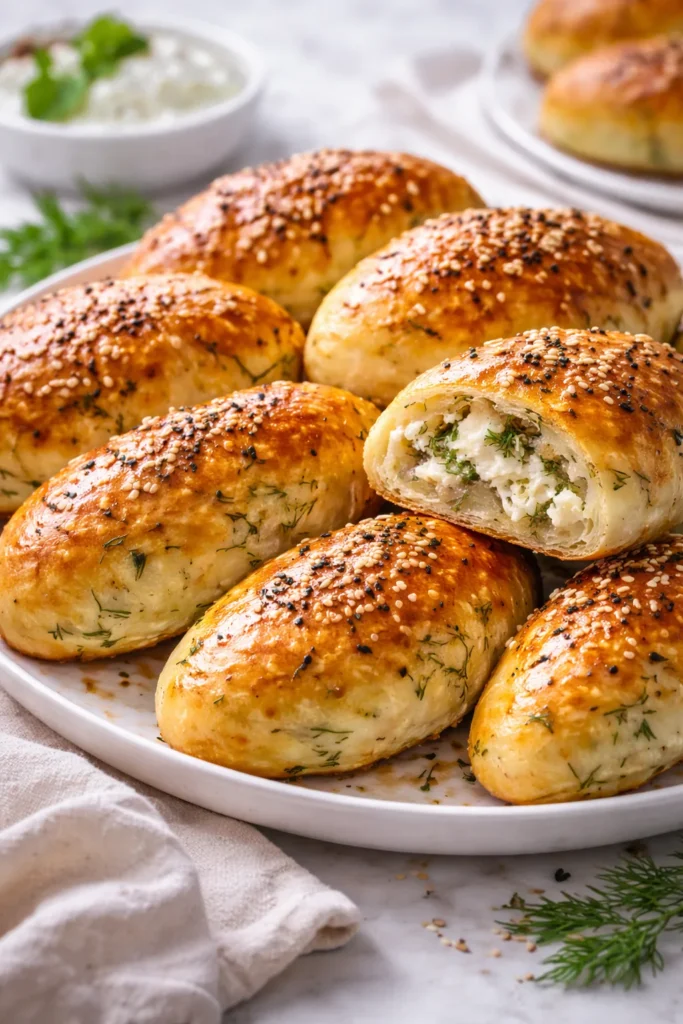
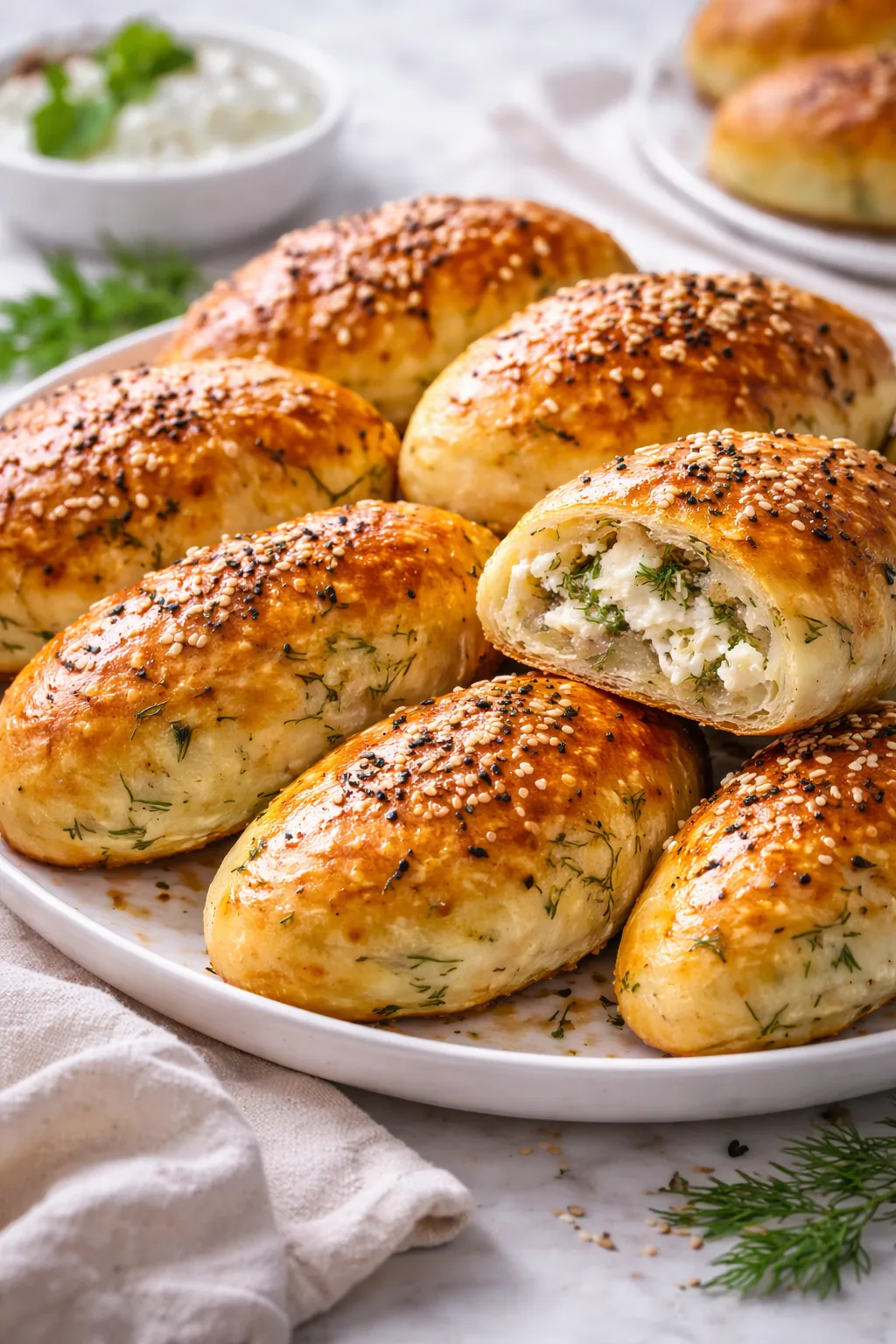
Dereotlu Poğaça (Bakery-Style Turkish Dill Pastries)
Ingredients
Yapılışı
- Mix the warm milk, sugar, and yeast together and let it sit for 5 minutes.
- Add the vegetable oil, eggs (keeping 1 yolk aside for brushing), and salt.
- Add the flour a little at a time and knead into a soft dough that doesn’t stick to your hands.
- Add the dill and knead one last time.
- Cover and let the dough rise for 30 minutes.
- Take pieces of dough and shape them, either plain or filled with the filling of your choice.
- Arrange on a baking tray and brush the tops with egg yolk.
- Bake in a preheated 180°C (350°F) oven until the tops are golden.
Püf Noktaları
⭐ Have you tried this recipe? Give it a star rating below and tell us how it turned out; your comment helps other readers too.
The Story of Dereotlu Poğaça (Turkish Dill Pastries)
Dereotlu poğaça is generally seen as part of the pastry tradition that stretches from Ottoman cuisine to today. As poğaça became popular across the Balkans and Anatolia, the recipes varied from region to region, and herbs and greens from the home kitchen were folded into the dough for more aromatic versions. Dill is used generously in Aegean and Marmara cooking and adds a fresh note to baked goods, so it found its way naturally into poğaça. Made at home at first, these pastries eventually found their place in bakery windows too.
Culturally, dereotlu poğaça is closely tied to tea time, welcoming guests, and the idea of the “homemade poğaça.” Because it stays soft and doesn’t go stale quickly, it can be baked early in the morning and served all day, which makes it a favorite for crowded tables. Even though we now call it “bakery-style,” dereotlu poğaça is still one of those classics kept alive most of all in the kitchens of mothers and grandmothers, with measurements by eye and a flavor that never lets you down.
A Few Words About Dereotlu Poğaça
Thanks to the fresh dill, dereotlu poğaça has a lighter, more refreshing aroma than classic plain poğaça. That said, it is made with white flour and oil, so it is fairly high in calories; if you are watching your weight, keep an eye on portion size. Enjoyed in moderation, it makes a lovely companion to tea time.
Tips for Perfect Dereotlu Poğaça
Don’t add the flour all at once; add it little by little. A soft dough that sticks slightly to your hands is what makes the poğaça cottony and fluffy. Let the dough rise in a warm place until doubled in size.
Dry the dill very well before adding it; wet dill will make the dough too sticky.
Serving and Storage
Serve the poğaça warm, with tea. Brushing them with egg yolk and sprinkling on nigella seeds or sesame seeds makes them look even more inviting.
Once cooled, the poğaça stay soft for 2 days in a bag. You can also freeze them for up to 1 month and refresh them in the oven.
This is for informational purposes only and is not medical advice.
You May Also Like
- Pofuduk Mayalı Poğaça Recipe (Fluffy Turkish Yeasted Savory Buns)
- Crispy, Juicy Kıymalı Poğaça Recipe (Turkish Meat-Filled Savory Buns)
- Zeytinli Poğaça (Crumbly Turkish Olive & Walnut Pastries)
Frequently Asked Questions About Dereotlu Poğaça
Can I use dried dill instead of fresh in this dereotlu poğaça recipe?
Yes, but use much less, since dried dill is more concentrated. Start with about 2 to 3 tablespoons in place of the fresh bunch. Dried dill absorbs moisture, so the dough may need a splash of warm milk, and the aroma will be milder than with fresh dill, so the flavor will not be quite as bright.
Why does the cheese leak out of my poğaça while baking?
Cheese usually leaks when the dough edges are not sealed well or the filling is too wet. Crumble the cheese and press out any extra moisture, use only a small spoonful, and pinch the edges tightly. Place the poğaça seam side down on the tray so the seal stays closed.
Can I shape the poğaça ahead of time and freeze them before baking?
Yes, you can shape the dough pieces and freeze them on a tray before transferring them to a freezer bag. Keep them frozen for up to 1 month. Thaw them on the baking tray, let them rest in a warm spot until slightly puffy, then brush with egg yolk and bake at 180°C (350°F) until golden.
Can I use fresh yeast instead of instant yeast for dereotlu poğaça?
Yes. As a rule of thumb, the 10 g packet of instant yeast equals roughly 30 g of fresh yeast. Crumble it into the warm milk with the sugar and let it foam for about 5 to 10 minutes before adding the other ingredients. If it does not foam, the yeast is likely old or the milk was too hot or too cold.
How do I know my poğaça dough has risen enough and the poğaça are done?
After the 30-minute rest, the dough should look puffy and feel light and airy, and a gentle poke should leave a slowly fading dent. In a preheated 180°C (350°F) oven, the poğaça are done after about 25 minutes, when the tops are evenly golden and the bottoms are lightly browned. If the tops color too fast, move the tray to a lower rack.
Similar recipes
 3 hr 10 min
Homemade Izmir Boyoz (Layered, Crispy Turkish Pastry)
 1 hr 10 min
Ispanaklı Tartolet (Turkish Spinach Tartlets) Recipe
 12 min
10-Minute Lavaş Pizza (Easy Lavash Flatbread Pizza)
 1 hr 55 min