
Acem Pilavı (Turkish Rice Pilaf with Carrots, Currants & Almonds): From the Ottoman Table to Today
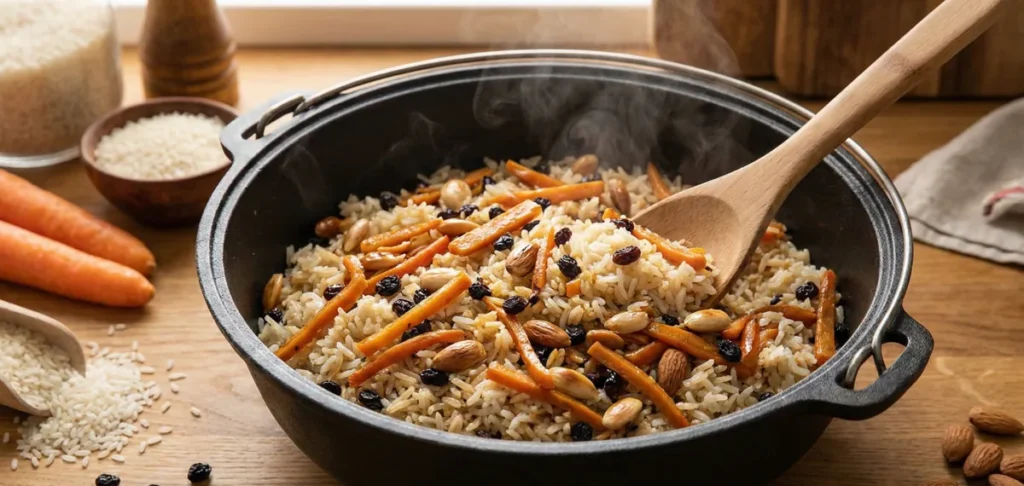
Acem pilavı looks similar to iç pilav (Turkish spiced liver and rice pilaf) and shares some of its ingredients, but it has a different character. İç pilav is usually made with rice, liver, chestnuts, plenty of spices and a more intense flavor, and it often ends up inside stuffed vegetables or alongside meat dishes. In Acem pilavı, carrots, currants and almonds take center stage. The sweet-savory balance is softer, and it’s a pilaf you can serve on its own, almost like a main dish. İç pilav is darker, spicier and richer, while Acem pilavı is lighter, more colorful and fresher in flavor.
Culturally, Acem pilavı is one of those recipes in Ottoman cuisine where you can feel a Persian (“Acem”) influence. Adding sweet touches to rice reflects the Middle Eastern and Persian culinary traditions as they reached Anatolia. Over time it moved from the palace kitchen to everyday tables and became a special pilaf, especially for weddings, gatherings and guest tables. It’s usually made in autumn and winter, and because it’s both impressive and filling, at a crowded table it isn’t just a “side pilaf” but the star of the meal.
What Goes Into Acem Pilavı:
Acem pilavı is a nicely balanced pilaf: rice as the base, carrots for color and gentle sweetness, almonds for crunch and richness, and currants for their natural sweetness. Thanks to the sweet-savory balance, it’s satisfying without feeling heavy, and you can enjoy it on its own as a meal. Made with a moderate amount of fat, it’s a lovely choice for special days.
This information is general in nature and is not medical advice.
I hope it makes a lovely memory at your table!
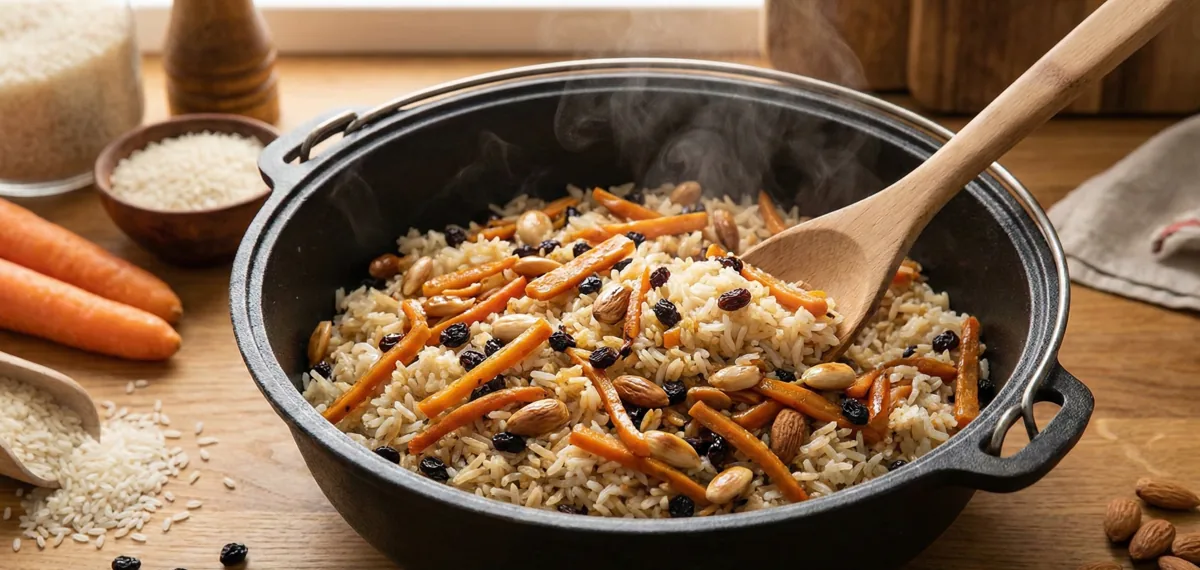
Acem Pilavı (Turkish Rice Pilaf with Carrots, Currants & Almonds)
Ingredients
Yapılışı
- Soak the rice in warm salted water for 20 minutes. Rinse under plenty of water until the starch is gone and the water runs clear, then drain.
- Heat the butter and olive oil in a pot. Add the almonds and toast until golden. Remove them from the pot and set aside.
- In the same pot, sauté the onion until soft. Add the carrots and stir for 3–4 minutes, keeping them slightly firm.
- Add the currants, salt, black pepper and (if using) the sugar, and stir.
- Add the drained rice to the pot and sauté for 2 minutes, until the grains separate.
- Pour in the hot chicken broth. Once it comes to a boil, reduce the heat to low and cover the pot.
- When the liquid has been absorbed, take the pot off the heat. Add the toasted almonds on top of the pilaf and fold in gently. Let it rest for 10 minutes.
- Fluff lightly and serve.
Püf Noktaları
⭐ Have you tried this recipe? Rate it with stars below and tell me how it turned out; your comment helps other readers too.
You May Also Like
- Bezelyeli Havuçlu Pilav (Turkish Rice Pilaf with Steamed Peas & Carrots)
- Turkish Chicken Pilaf with Vegetables (Tavuklu Garnitürlü Pilav): Fluffy, Restaurant-Style
- Turkish Rice Pilaf (Pirinç Pilavı) Recipe
Frequently Asked Questions About Acem Pilavı
Can I use basmati or long-grain rice instead of baldo rice in Acem pilavı?
Yes, long-grain or basmati rice works, but the texture will be a bit drier and more separate than with baldo. Rinse and soak it as in the recipe, then check it a few minutes early, since long-grain rice can need slightly less liquid. Add the broth a little at a time if you are unsure, and keep the pot covered while it cooks.
Why did my Acem pilavı turn out sticky or mushy?
Sticky pilaf usually means leftover surface starch, too much liquid, or stirring while it cooks. Rinse the rice until the water runs clear, stick to the 3 cups of hot broth for 2 1/2 cups of rice, and keep the lid on over low heat without stirring. The 10-minute rest also lets the steam settle, so don’t skip it.
How long does Acem pilavı keep in the fridge, and can I freeze it?
Cool it within about an hour or two of cooking, then keep it in a covered container in the fridge for up to 3 days. You can freeze portions for around a month, though the carrots and almonds will lose some of their crunch. Reheat until steaming hot, sprinkling in a spoonful of water and covering the pot so the rice stays soft.
Can I make Acem pilavı ahead for guests and reheat it?
Yes, you can cook it a few hours ahead, which is handy for a crowded table. Keep it covered at room temperature for no more than about two hours, or refrigerate it. Reheat gently in a covered pot over low heat with a splash of water, and stir in the toasted almonds at the end so they stay crisp.
How can I make Acem pilavı vegan or nut-free?
For a vegan version, replace the butter with extra olive oil and use vegetable broth or water instead of chicken broth. If you need to avoid almonds, toasted sunflower seeds or pumpkin seeds give a similar crunch, so use them only if nobody at the table has a seed allergy. The rest of the recipe stays the same.
Similar recipes
 55 min
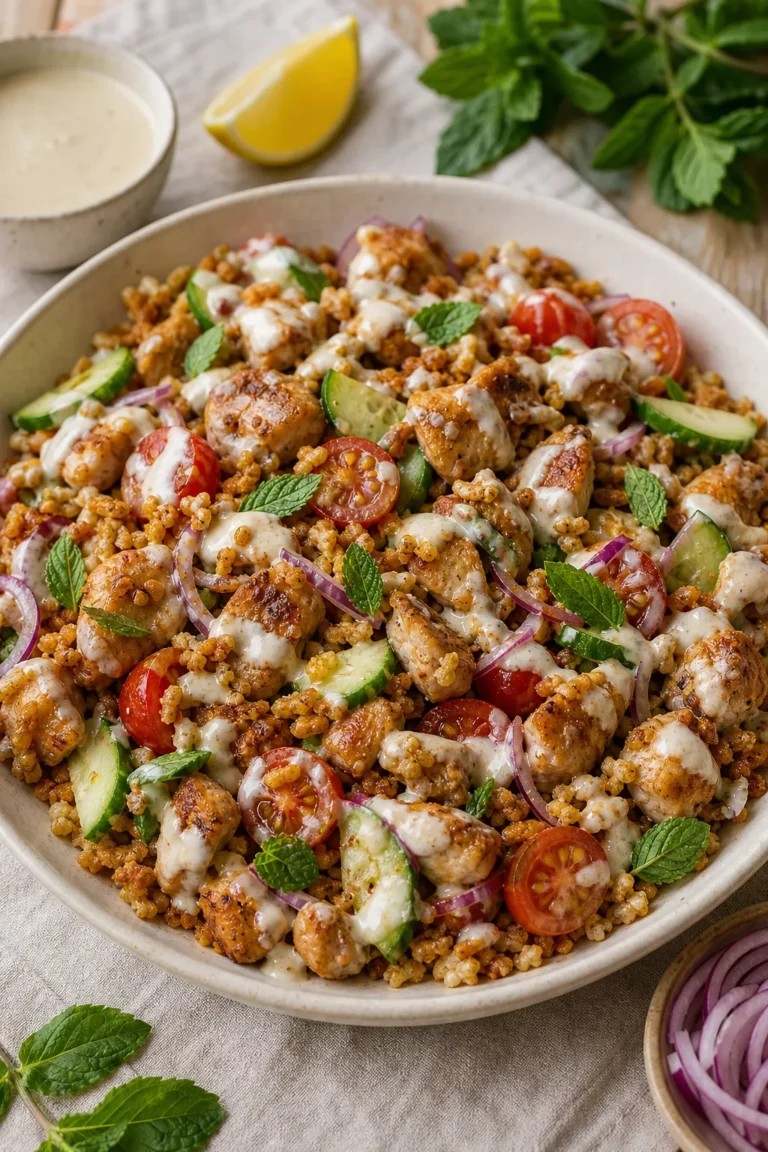
Tavuklu Çıtır Pirinç Salatası (Crispy Rice Chicken Salad with Lemon-Tahini Dressing)
 40 min
Garlic Parmesan Sauce Burger Recipe (Sarımsaklı Parmesan Soslu Hamburger)
 1 hr 30 min
Layered Mantı Lasagna Recipe (Turkish Dumpling Lasagna with Beef & Cabbage)
 1 hr 10 min