
Orange Roast Duck (Portakallı Fırın Ördek): An Elegant Touch for New Year’s Eve
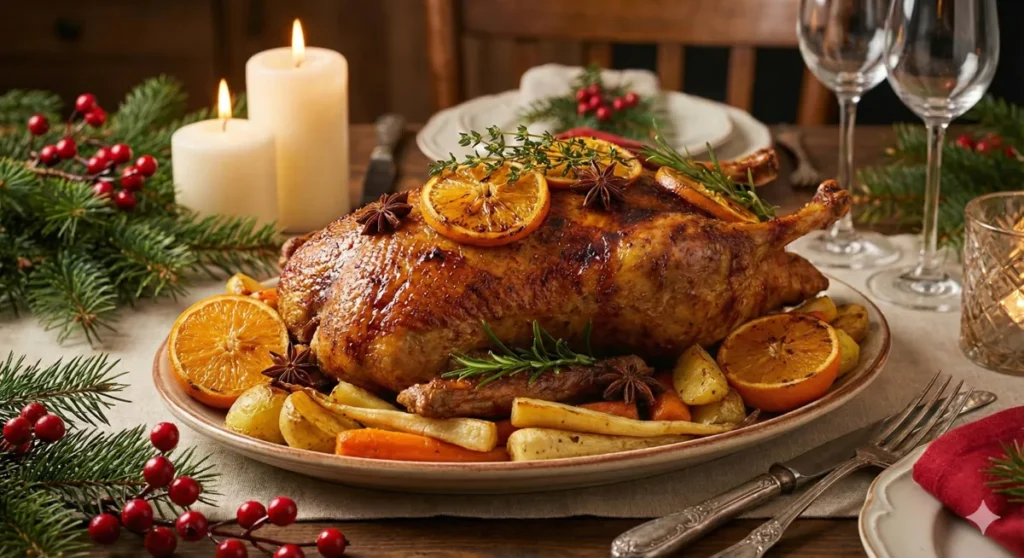
Portakallı Ördek (orange duck) is a classic dish with roots in European palace kitchens, known for its balance of sweet and savory flavors. Its best-known form in French cuisine is called “Canard à l’Orange”, and it began appearing on aristocratic tables from the 17th century onward. Citrus was expensive and precious at the time, so using it in meat dishes was seen as a sign of wealth and refinement. The natural richness of the duck is balanced by the bright, tangy aroma of orange, giving a flavor that is sophisticated without feeling heavy.
Over time, this special dish spread from France to England and Central European kitchens and became a symbol of dinner parties and celebration tables. Today, orange duck is especially associated with the winter months and the New Year season. Part of the reason is that winter is when duck is at its best, and it is also when oranges are at their freshest. With its long cooking time and impressive presentation, orange duck remains a timeless classic and a true “special occasion dish” on New Year’s tables.
Why Orange Duck Makes a Satisfying Main Course
Orange duck is a hearty main dish that is rich in protein and keeps you full for a long time. Duck meat contains iron, zinc and B vitamins, which makes it a nourishing choice for a celebration meal. The orange adds freshness to the dish and balances the richness of the duck.
The natural acidity of the orange also helps keep the flavor from becoming heavy. Served in balanced portions, it is an enjoyable and satisfying option for special-occasion tables, especially in the winter months.
This content is for general information only and is not medical advice.
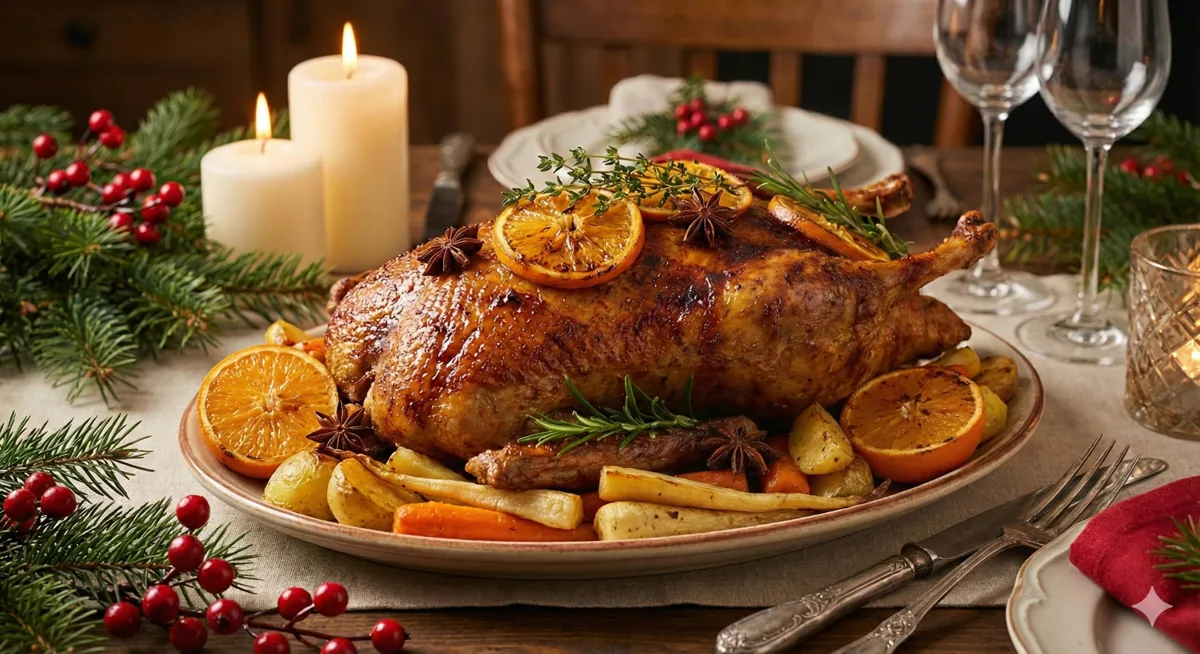
Orange Roast Duck (Portakallı Fırın Ördek): An Elegant Touch for New Year’s Eve
Ingredients
Yapılışı
- Wash the duck well and pat it completely dry with paper towels. Trim off any excess fat (especially around the neck and belly area). This step is important for more even browning in the oven.
- In a bowl, mix the orange juice, olive oil, honey, soy sauce (if using), crushed garlic, salt, black pepper, allspice and just a little cinnamon.
- Rub the marinade all over the duck. Gently work some under the skin with your hand as well. If you have time, wrap the duck in plastic wrap and let it rest in the refrigerator for 1–2 hours at this point to boost the flavor (not required).
- Place the coarsely chopped onion, fresh thyme or rosemary and a few pieces of orange peel inside the duck. You can close the opening with a toothpick.
- Place the duck breast-side up on a baking tray. Arrange the orange slices on top.
- Roast in a preheated 160°C (320°F) oven, covered with foil, for 1 hour 15 minutes.
- When the time is up, remove the foil. Raise the oven temperature to 190°C (375°F). Roast for another 30–45 minutes, spooning the duck’s own pan juices over it from time to time, until the skin is a deep golden red.
- Do not carve the duck as soon as it comes out of the oven. Cover it loosely and let it rest for 10–15 minutes. This helps the meat keep its juices.
- Serve with orange slices and roasted vegetables. The steam that rises when you cut the first slice is one of the loveliest moments of New Year’s Eve.
Püf Noktaları
⭐ Have you tried this recipe? Give it a star rating below and tell us how it turned out; your comment will help other readers too.
You May Also Like
- Fırında Bütün Tavuk (Turkish Oven-Roasted Whole Chicken) Recipe
- Fırında Yumurtalı Ispanak (Turkish Baked Spinach with Eggs)
- Elbasan Tava Recipe (Turkish Baked Lamb with Yogurt Sauce)
Frequently Asked Questions About Orange Roast Duck
Why isn’t the skin on my orange roast duck crispy, and how can I fix it?
Soft skin usually comes from leftover moisture or fat trapped under the skin. After patting the duck dry, lightly prick the skin without piercing the meat so the fat can escape, and spoon off the rendered fat from the tray during the 190°C browning stage. The honey and orange can darken quickly, so if the skin colors too fast, tent the duck loosely with foil.
How do I know when my orange roast duck is fully cooked?
Use a thermometer in the thickest part of the thigh, without touching the bone. It should read at least 74°C (165°F) for safety, and many cooks go to about 80-90°C for more tender leg meat. The juices should also run clear and the leg should move easily. Start checking about 30 minutes into the browning stage.
Can I make orange roast duck ahead of time for New Year’s Eve?
Yes, you can roast it a day ahead. Cool it within two hours, cover it and refrigerate it, and eat it within 2-3 days. To reheat, cover it with foil and warm it at 160°C until it is steaming hot throughout (74°C inside). Then uncover it and give it about 10 minutes at 190°C to re-crisp the skin.
What can I do with the pan juices and duck fat left after roasting?
Pour the pan juices into a jug and let the fat rise, then skim it off. Simmer the remaining juices for a few minutes with a splash of orange juice to make a light sauce, and strain it if you like. Strained duck fat can be kept in a sealed jar in the fridge for about a week and is excellent for roasting potatoes or root vegetables.
How do I thaw a frozen duck safely before making orange roast duck?
Thaw it in the refrigerator, in its wrapping on a tray on the bottom shelf, never on the counter. A 2-2.5 kg duck usually needs about 24-36 hours. Once thawed, remove the giblets from the cavity, check that no ice remains inside, and pat the skin completely dry before you season it.
Similar recipes
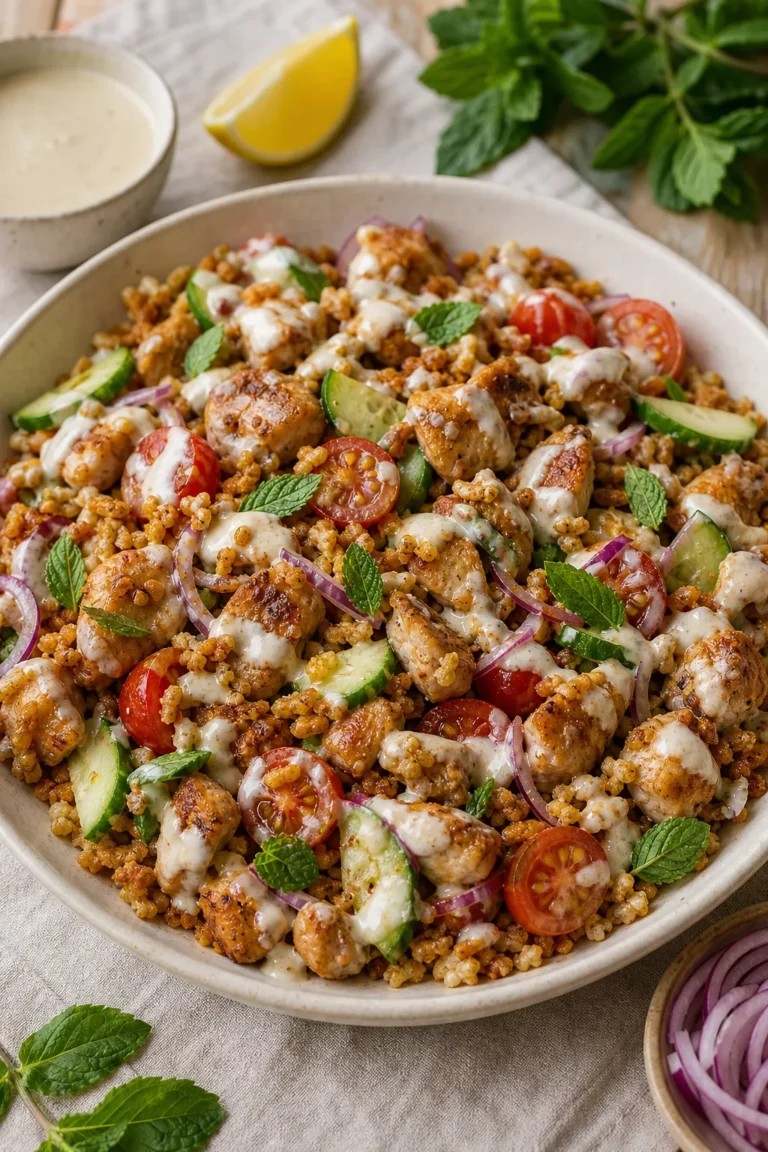 55 min
Tavuklu Çıtır Pirinç Salatası (Crispy Rice Chicken Salad with Lemon-Tahini Dressing)
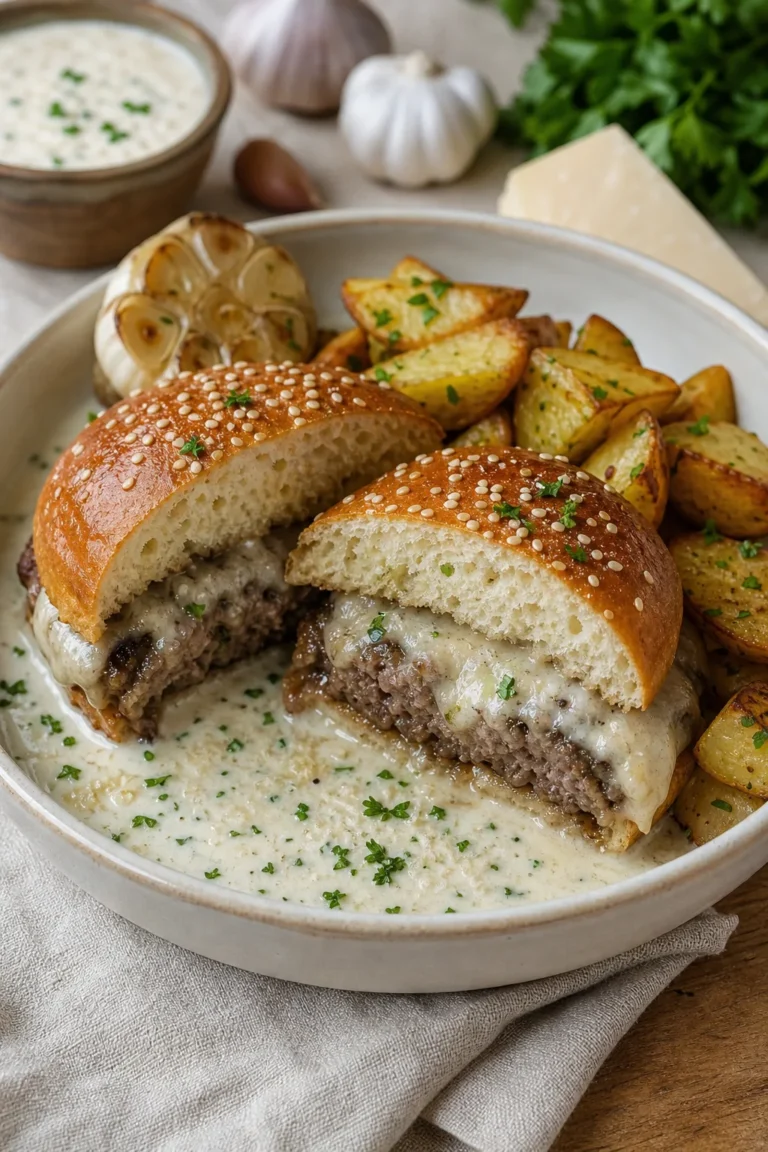 40 min
Garlic Parmesan Sauce Burger Recipe (Sarımsaklı Parmesan Soslu Hamburger)
 1 hr 30 min
Layered Mantı Lasagna Recipe (Turkish Dumpling Lasagna with Beef & Cabbage)
 1 hr 10 min