
Soft Yeasted Potato Poğaça (Patatesli Poğaça) – Fluffy as Cotton!


Soft Yeasted Potato Poğaça (Patatesli Poğaça) – Fluffy as Cotton!
Ingredients
Yapılışı
- Boil the potatoes, peel them and mash.
- If you’re using onion, chop it finely and sauté in the olive oil for 2-3 minutes.
- Add the mashed potatoes. Add the salt, black pepper, red pepper (and cumin if you like) and stir everything together for 2-3 minutes.
- Take it off the heat and add the parsley once it has cooled to lukewarm. (It shouldn’t be hot, so it doesn’t soften the dough.)
- Pour the warm milk and warm water into a mixing bowl.
- Add the sugar and yeast and stir. Let it sit for 5 minutes (the yeast should foam a little).
- Add the oil and the egg white.
- Start kneading, adding the flour a little at a time, and add the salt toward the end.
- Knead a soft dough that is slightly sticky on your hands but comes together. (Don’t dump in all the flour at once.)
- Cover the dough.
- Leave it in a warm place to rise for 45–60 minutes (until doubled in size).
- Shape them like little potatoes:
- Gently press the air out of the dough.
- Divide it into 20 equal pieces.
- Flatten each piece in your palm and put 1 heaping tablespoon of potato filling in the center.
- Pinch the edges together to close, then shape into an oval in your palm (like a potato).
- Make light scratches on top with a fork (it gives the perfect potato look!).
- Arrange them on a baking tray lined with parchment paper.
- Cover and let them rest for another 15–20 minutes.
- Mix the egg yolk, milk and turmeric.
- Brush it over the poğaça.
- Sprinkle with sesame seeds if you like, then put them in the oven.
- Bake in a preheated 180°C (350°F) oven with top and bottom heat for 18–22 minutes.
- Take them out when the tops are nicely golden.
- Let them rest on the tray for 5 minutes after taking them out, then serve. (They set to be even fluffier.)
Püf Noktaları
⭐ Have you tried this recipe? Give it a star rating below and tell us how it turned out; your comment helps other readers too.
The Story Behind Potato Poğaça;
Poğaça is a pastry that is hard to pin down to a single city in Anatolia, because it belongs to a whole “family of savory buns” with many relatives along the Balkans–Levant–Hungary line, shaped over the centuries by exchange between cultures. Both the name and the many varieties of poğaça we know today point to this circulation: if you trace the word “poğaça,” the path leads back to Italian focaccia and Late Latin panis focaceus (bread baked on the hearth or in the fire). That is why poğaça became a classic, taking on local fillings (cheese, ground meat, olives and so on) in the city bakeries, neighborhood baking trays, breakfast tables and tea times of the Ottoman lands.
Potato poğaça tells a more “recent” story: since the potato is a New World crop, its spread in Ottoman and Turkish cooking was a process that took centuries. Sources point out that potato cultivation and consumption became more noticeable especially from the second half of the 19th century, and that it was embraced more quickly between the late 19th and early 20th century. Because the potato is filling, affordable and carries flavor well, it quickly found a place in fillings and pastries, and putting it inside poğaça fits that practical home-kitchen habit. Today, presentations like “potato-shaped poğaça” (with turmeric in the glaze for that golden color) are a more modern, home-oven interpretation.
Enjoying Potato Poğaça;
Potato poğaça is a hearty bake that is lovely at breakfast or as a snack. Like most pastries, it is a rich treat made with flour and oil, so I like to keep the portions small and serve it with ayran or yogurt and a fresh salad. Adding onion and parsley to the filling gives it extra flavor, and it helps not to overdo the oil in the filling or over-bake the buns in the oven.
This content is for informational purposes only and is not medical advice.
You May Also Like
- Pofuduk Mayalı Poğaça Recipe (Fluffy Turkish Yeasted Savory Buns)
- Crispy, Juicy Kıymalı Poğaça Recipe (Turkish Meat-Filled Savory Buns)
- Dereotlu Poğaça Recipe (Turkish Dill Savory Pastry, Bakery-Style & Soft)
Frequently Asked Questions About Patatesli Poğaça
Can I freeze potato poğaça, and how do I reheat it?
Yes, freezing baked potato poğaça works best. Let the buns cool completely, then freeze them in an airtight bag or container for up to 1 to 2 months. Thaw at room temperature, then warm them in a 160°C (320°F) oven for about 5 to 8 minutes so they turn soft and fluffy again.
How long does Patatesli Poğaça keep, and where should I store it?
Keep it in an airtight container for up to 1 day at room temperature, as long as your kitchen is cool. Because of the potato filling, it is safer to refrigerate it after that and eat it within 2 to 3 days. Warm each bun briefly in the oven before serving.
Can I use leftover mashed potatoes for the poğaça filling?
Yes, if the mash is plain and firm. Mash that already has milk or butter in it is often too loose and will make the dough soggy. Season it with the salt, black pepper and red pepper from the recipe, and if it is wet, cook it in the pan for a few minutes. Cool it fully before filling.
Why does the filling leak out of my potato poğaça while baking?
Usually the filling is too wet, there is too much of it, or the seam is not sealed well. Stick to 1 heaping tablespoon per piece and pinch the edges firmly. Place the buns seam side down on the tray. Boiling the potatoes whole, rather than cut up, helps keep the filling from getting watery.
Why didn’t my poğaça dough rise?
The most common cause is liquid that was too hot, which kills the yeast. The milk and water should only be lukewarm. Check that the yeast foams within 5 minutes, and keep the dough covered in a warm spot. In a cool kitchen, the first rise may take closer to 60 minutes or a little longer.
Similar recipes
 3 hr 10 min
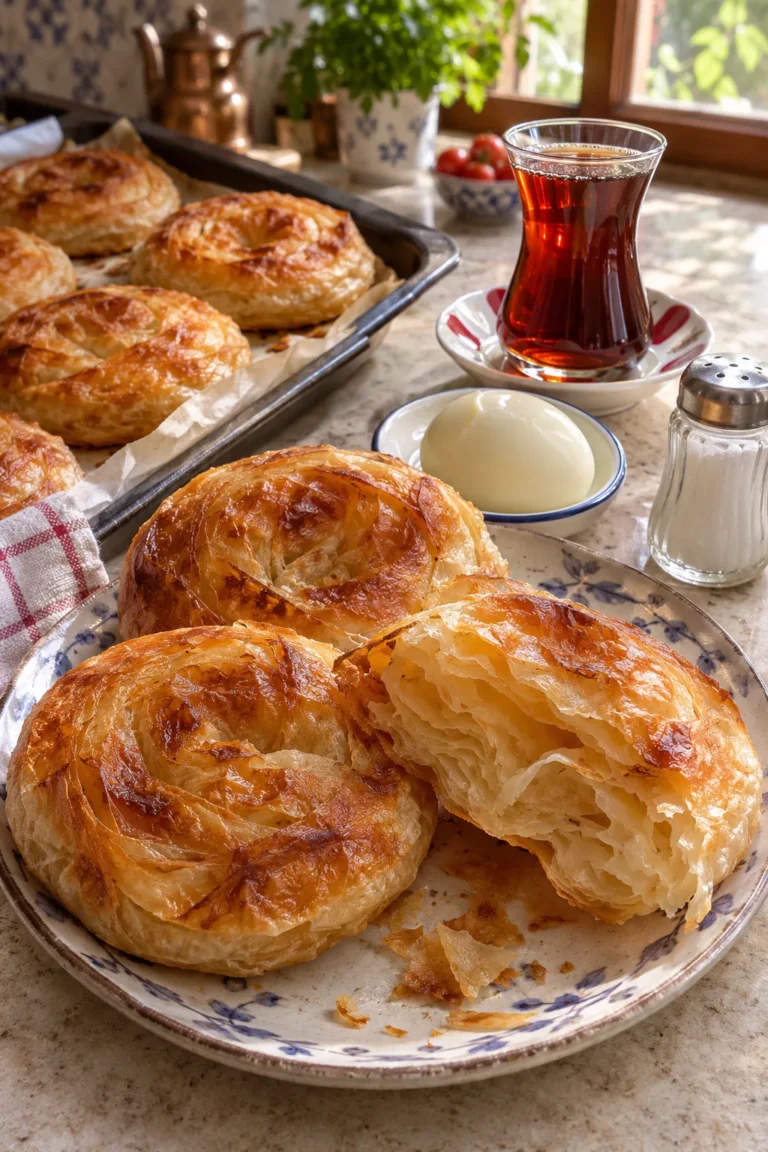
Homemade Izmir Boyoz (Layered, Crispy Turkish Pastry)
 1 hr 10 min
Ispanaklı Tartolet (Turkish Spinach Tartlets) Recipe
 12 min
10-Minute Lavaş Pizza (Easy Lavash Flatbread Pizza)
 1 hr 55 min