
Hamsi Buğulama Recipe (Turkish Anchovies in a Pan, in Their Own Juices, 25 Minutes)
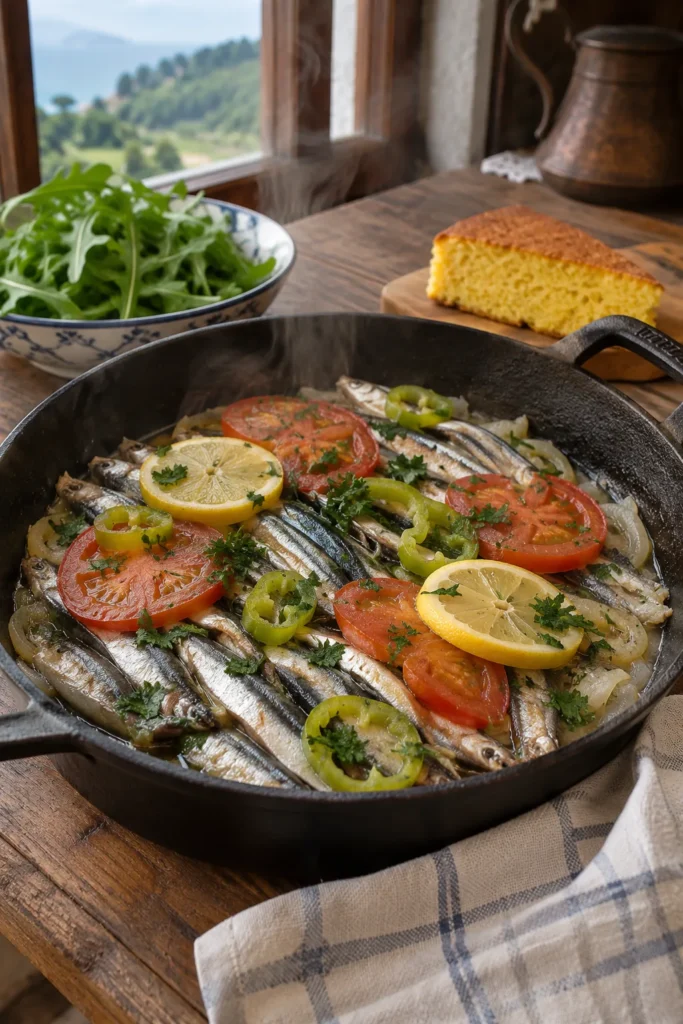
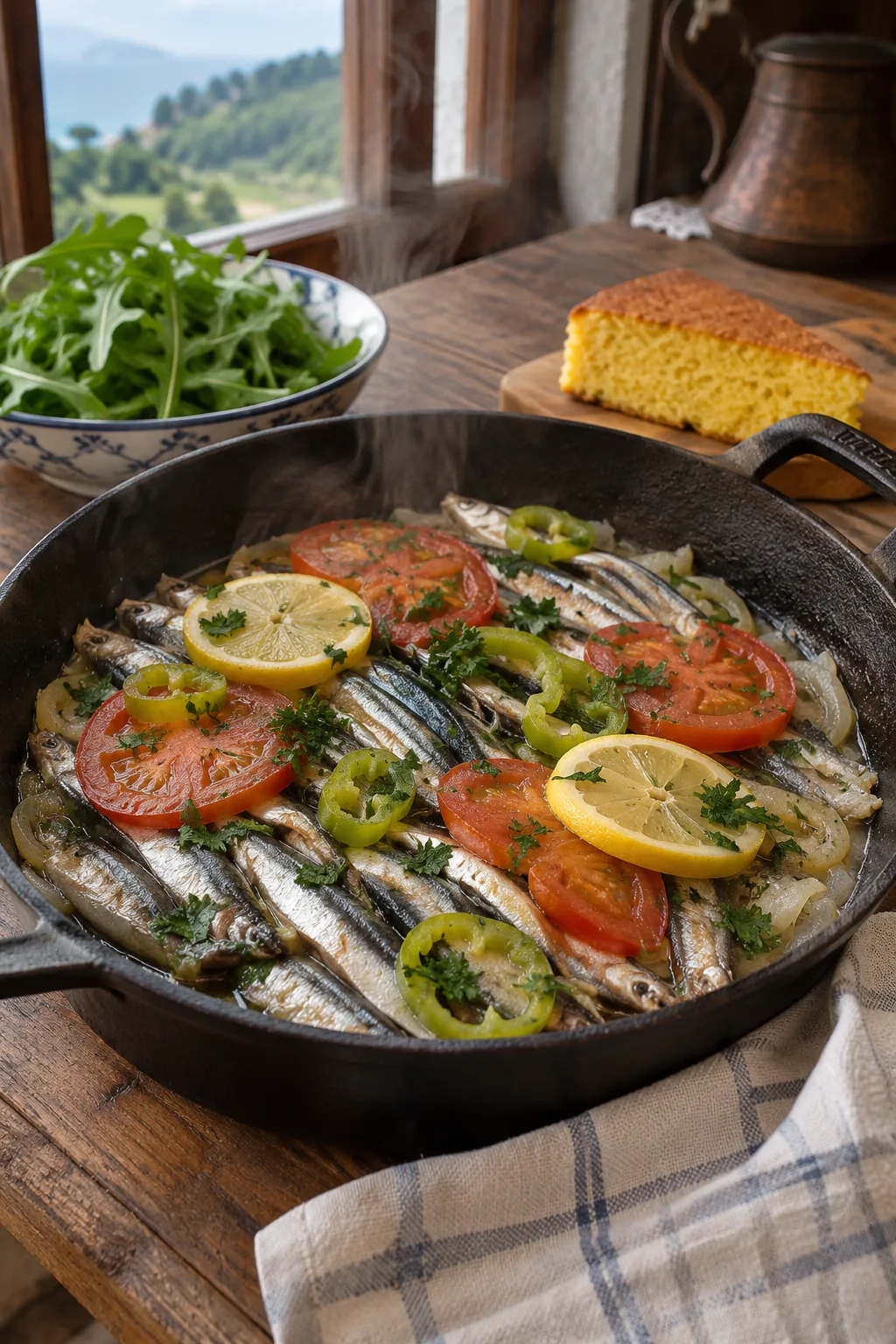
Hamsi Buğulama (Turkish Anchovies Cooked in Their Own Juices)
Ingredients
Yapılışı
- Prepare the anchovies: Rinse the cleaned anchovies well under plenty of water, transfer to a colander and let them drain thoroughly. They’re much nicer to eat if you remove the bones.
- Make the base: Drizzle half of the olive oil over the bottom of a wide pan with a lid (or a shallow pot). Spread the onion rings and garlic over the bottom.
- Layer: Arrange the anchovies side by side on top of the onions, backs facing up. Sprinkle with salt, black pepper and red pepper flakes.
- Add the vegetables: Place the tomato slices, pepper rings and lemon slices over the anchovies. Drizzle with the remaining olive oil and the lemon juice.
- Steam-cook: Cover the pan and cook over medium heat for 3–4 minutes until steam builds up, then over low heat for 12–15 minutes. Don’t add any water; the anchovies will release their own juices.
- Serve: Remove from the heat, sprinkle with parsley, let rest for 5 minutes, then serve straight from the pan.
Püf Noktaları
⭐ Have you tried this recipe? Give it a star rating below and tell us how it turned out; your comment helps other readers too.
About Hamsi Buğulama
Hamsi (anchovy) is the undisputed star of Black Sea cuisine. When anchovy season arrives, stretching from late autumn into winter, the market stalls turn silver and kitchens start cooking anchovies in dozens of different ways: pan-fried, in pilaf, as hamsi kuşu, as meatballs, and of course as buğulama.
Buğulama is a method of cooking fish without frying it, using its own juices and the steam from the vegetables. That way the delicate flavor of the anchovies isn’t lost, and combined with the tang of tomato and lemon, you get a dish that is light yet has a sauce you can’t get enough of.
Tips for Hamsi Buğulama
When buying anchovies, choose ones with bright eyes, red gills and firm bodies. After washing them, drain them very well so the buğulama doesn’t turn watery.
Spreading the onions over the bottom of the pan keeps the anchovies from sticking and gives a sweet aroma as they cook. Don’t lift the lid too often; the steam inside is what cooks the dish.
Serving and Storing
Serve hamsi buğulama hot with cornbread, an arugula salad and red onion. Dipping bread into the sauce is the best part of this dish!
Fish is most delicious eaten fresh. If you have leftovers, store them in a covered container in the refrigerator and eat them within 1 day; reheat over low heat with the lid on.
Frequently Asked Questions About Hamsi Buğulama
Can hamsi buğulama be made in the oven? Yes. Layer everything the same way in a baking dish, cover it with foil and bake at 190°C (about 375°F) for roughly 20 minutes.
Should I cook the anchovies with the bones in? Anchovies with the bones in hold their shape more easily, but boned anchovies are much easier to eat. The cooking time is the same for both.
You May Also Like
- Fırında Kefal (Turkish Baked Grey Mullet with Lemon, Bay Leaves & Potatoes)
- Baked Cauliflower Gratin with Béchamel (Karnabahar Graten)
- Homestyle Et Sote (Turkish Sautéed Beef with Peppers & Tomatoes)
Frequently Asked Questions About Hamsi Buğulama
Can I use frozen anchovies for this hamsi buğulama recipe?
Yes, frozen anchovies work well if you thaw them fully first. Thaw them overnight in the refrigerator, rinse gently, and let them drain in a colander for at least 15 to 20 minutes. Pat them lightly with paper towels, because extra water will thin out the sauce.
What can I use instead of anchovies in hamsi buğulama?
Fresh sardines or other small, oily fish such as smelt are the closest substitutes. Clean them well and keep the layers the same. Larger fish may need a few extra minutes on low heat, so check that the flesh is opaque and flakes easily before serving.
My hamsi buğulama turned out watery. What went wrong?
Most often the anchovies or tomatoes were not drained well enough, or the lid was lifted too often. Drain the fish thoroughly and use firm tomatoes. If the sauce is still thin at the end, remove the lid and simmer on low for 2 to 3 minutes, shaking the pan gently without stirring.
I don’t have a pan with a lid. Can I still make buğulama?
Yes, you can cover the pan snugly with a large plate or a sheet of foil pressed around the edges. The goal is to trap the steam so the fish cooks in its own juices. Keep the heat low once steam builds, and avoid peeking too often.
Can I prepare hamsi buğulama ahead of time?
You can prep the vegetables and clean the anchovies a few hours ahead and keep everything covered in the refrigerator, then layer and cook just before serving. The dish is best fresh, since the fish is delicate. Cooked fish does not reheat as nicely, so it is better not to freeze it.
Similar recipes
 55 min
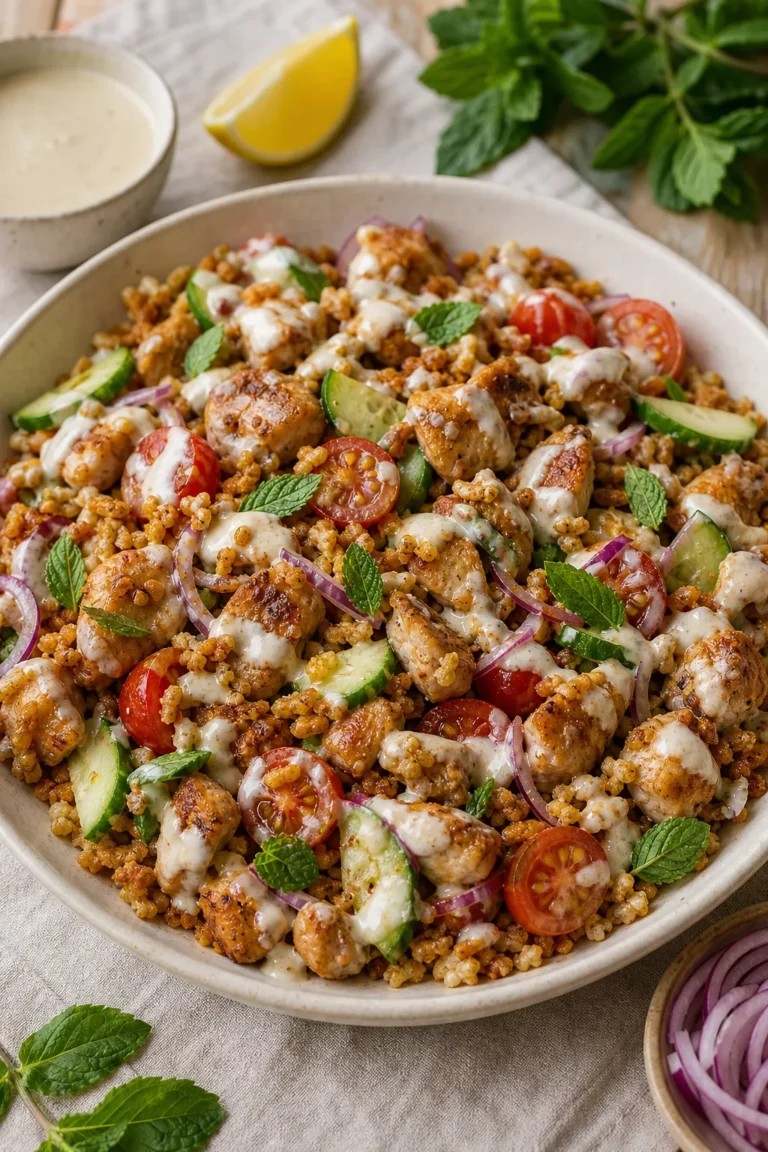
Tavuklu Çıtır Pirinç Salatası (Crispy Rice Chicken Salad with Lemon-Tahini Dressing)
 40 min
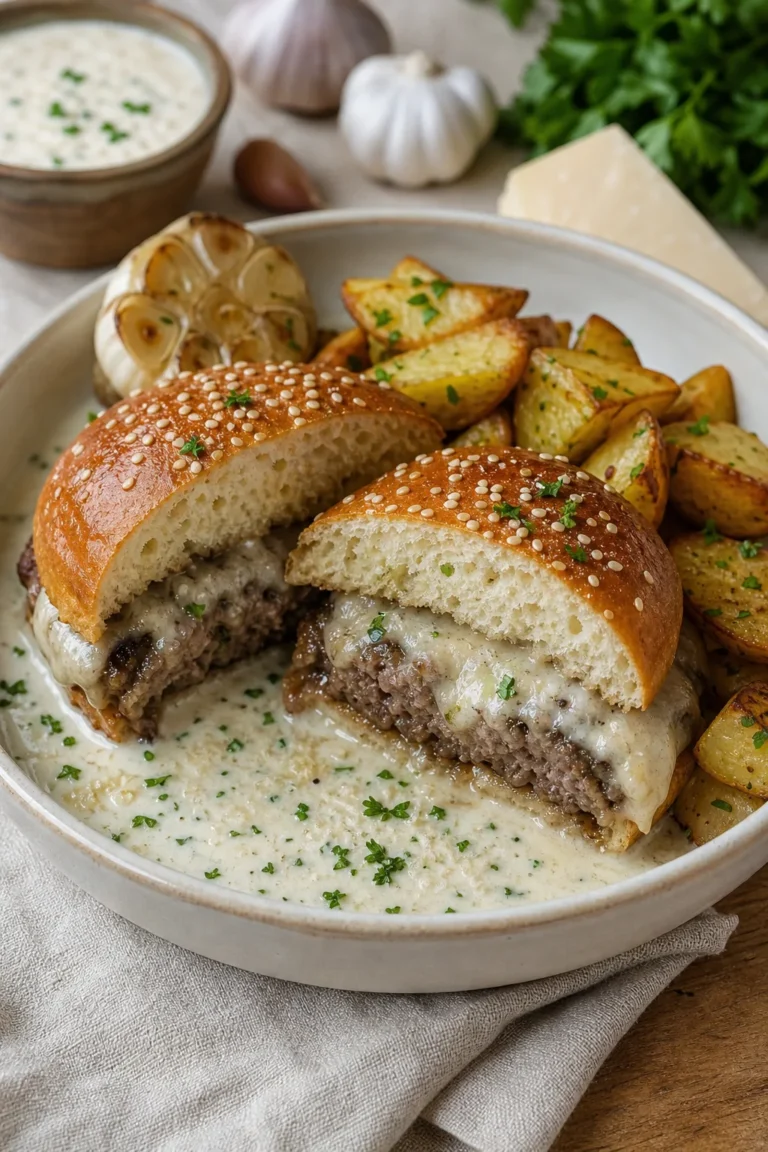
Garlic Parmesan Sauce Burger Recipe (Sarımsaklı Parmesan Soslu Hamburger)
 1 hr 30 min
Layered Mantı Lasagna Recipe (Turkish Dumpling Lasagna with Beef & Cabbage)
 1 hr 10 min