
Fırında Kefal (Turkish Baked Grey Mullet with Lemon, Bay Leaves & Potatoes)
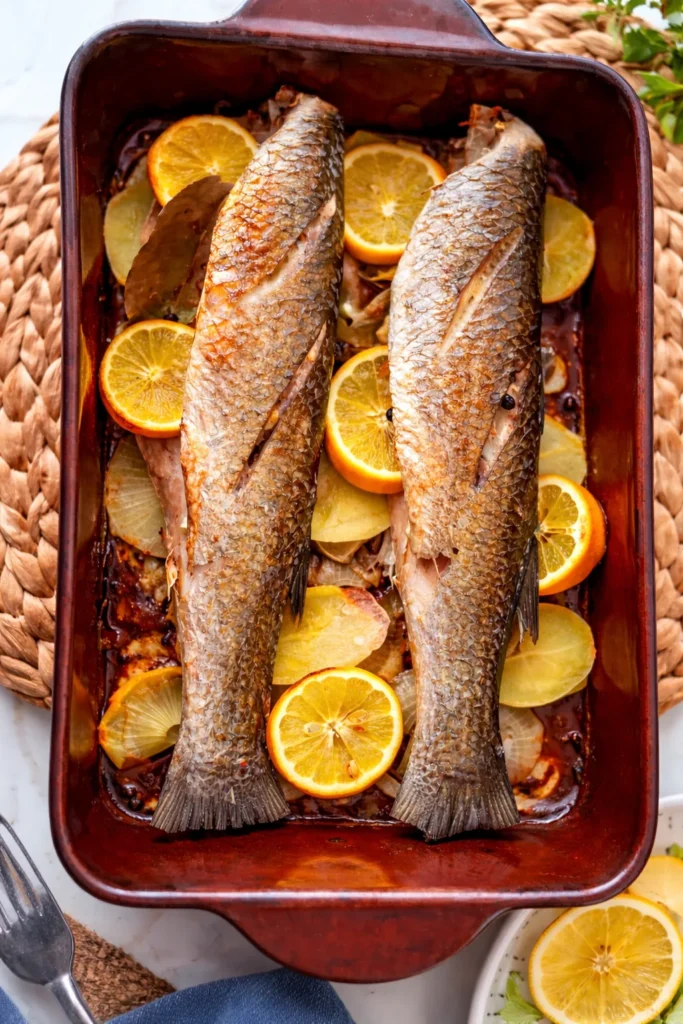
About Baked Mullet (Fırında Kefal)
Mullet (kefal) is one of the fish that has been eaten for centuries along Turkey’s coasts, especially on the Mediterranean and Aegean, and it has an important place in home cooking. Caught since ancient times in lagoons, deltas and shallow coastal waters, mullet was an “accessible” fish on the table, especially when fishing was daily and local. In Ottoman cooking, it was mostly prepared with simple methods such as baking and steaming, in recipes that don’t overpower the fish’s own flavor.
In terms of season, mullet is considered tastier in autumn and winter (October–February). During this time its flesh is firmer and its flavor more pronounced. Especially in cold weather, mullet baked in the oven is often preferred in traditional cooking, since baking reduces the fishy smell and gives a more balanced flavor.
Good to Know About Mullet
Mullet is a traditional fish that has been eaten for centuries in Aegean and Mediterranean cooking, and its flavor is especially good in the autumn and winter months. Because it is a bottom-feeding fish, it is important that it comes from clean waters. I’d enjoy it every now and then rather than all the time.
This content is for informational purposes only and is not medical advice.
I hope it leaves you with a lovely memory!
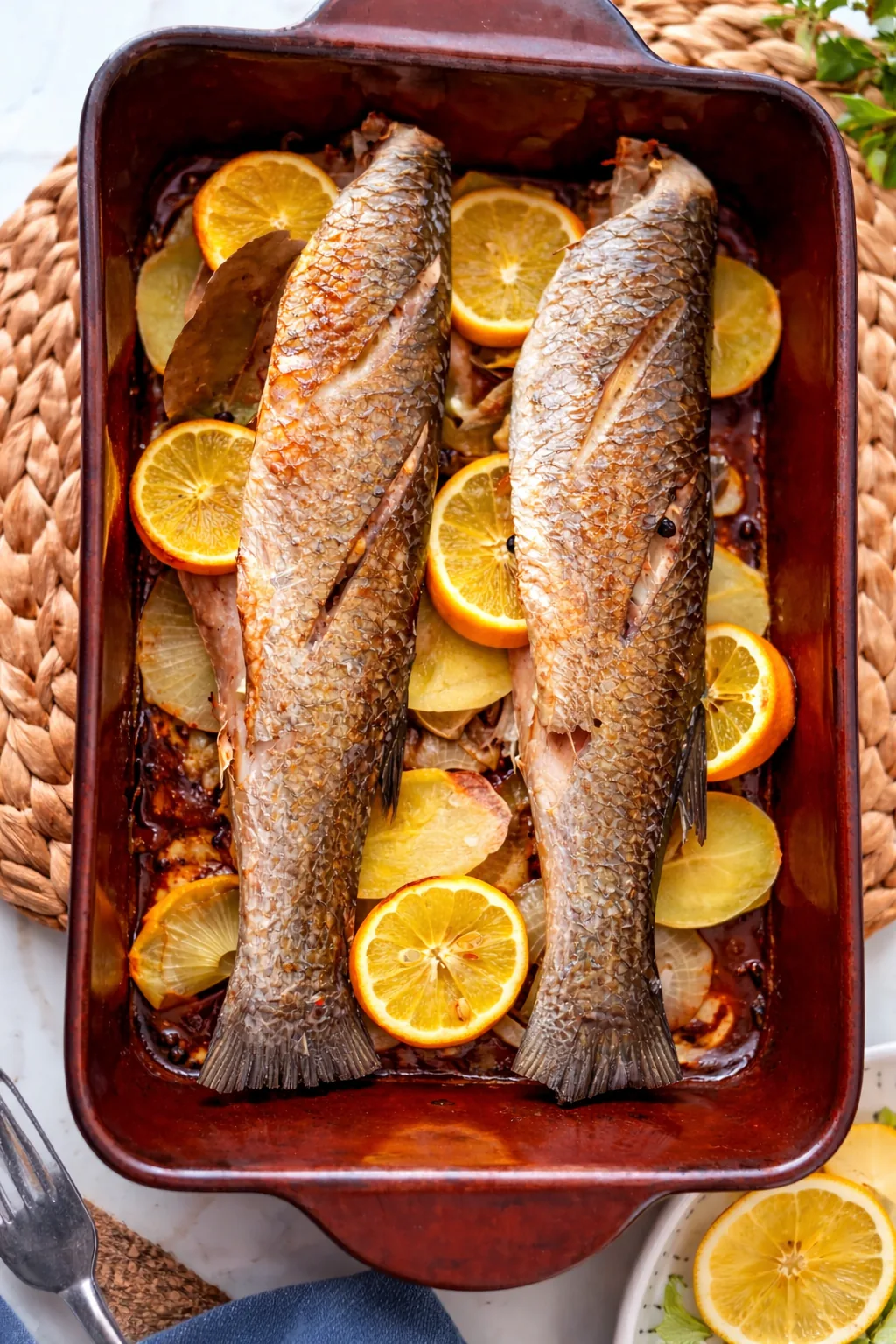
Fırında Kefal (Turkish Baked Grey Mullet with Lemon, Bay Leaves & Potatoes)
Ingredients
Yapılışı
- Have the fish cleaned: Buy the mullet from a trustworthy place and have it cleaned very well. Make sure no black membrane is left inside the belly.
- Rub the fish: Rub the fish well with salt and lemon and let it rest for 5 minutes. Then rinse again and drain.
- Prepare the tray: Spread the potatoes and onion rings over the bottom of the baking dish. Sprinkle with a little salt and black pepper and drizzle with olive oil.
- Dry the fish: Pat the mullet thoroughly dry with paper towels.
- Stuff the fish: Place garlic, black pepper, a bay leaf and a lemon slice inside each fish.
- Assemble: Lay the fish on top of the potato and onion bed. Drizzle with olive oil, and if you like, add a few more lemon slices and bay leaves to the tray.
- Bake, covered: Bake in an oven preheated to 400°F (200°C) for the first 20–25 minutes, covered with parchment paper.
- Bake, uncovered: Remove the parchment paper and bake for another 10–15 minutes, until the top is golden.
- Serve: Let it rest for 5 minutes after taking it out of the oven, then serve hot. Afiyet olsun!
Püf Noktaları
⭐ Have you tried this recipe? Give it a star rating below and tell us how it turned out; your comment helps other readers too.
Tips for Baked Mullet
Score the fish with a knife in a crisscross pattern; the lemon and spices work their way in, and the fish cooks evenly. Slice the potatoes thinly so they cook in the same time as the fish.
Rubbing the fish with lemon and salt and letting it rest for 15 minutes before baking helps reduce its smell.
Serving and Storage Suggestions
Serve the mullet with arugula salad, red onion and lemon.
Fish is best eaten fresh; if you have leftovers, eat them within 1 day, stored in the refrigerator.
You May Also Like
- Baked Stuffed Trout with Spiced Rice Filling (Alabalık Dolması)
- Makarnalı Fırın Köfte (Turkish Baked Meatballs with Pasta): A Hearty One-Pan Dinner
- Patates Oturtma Recipe (Turkish Baked Potato & Ground Meat Casserole)
Frequently Asked Questions About Fırında Kefal
How can I tell when fırında kefal is fully cooked?
The fish is done when the flesh turns opaque and flakes easily when you press the thickest part with a fork, usually after the 20–25 minutes covered and 10–15 minutes uncovered at 400°F (200°C). The skin should look golden and the potatoes should be tender. If the flesh near the bone still looks translucent, bake it a few more minutes.
Can I use aluminum foil instead of parchment paper when baking mullet?
Yes, you can cover the tray tightly with foil for the first 20–25 minutes instead of parchment. It traps steam in the same way and keeps the fish moist. Remove it for the last 10–15 minutes so the top can turn golden, and be careful of the hot steam when you lift it.
What can I use instead of grey mullet in this recipe?
Other whole, medium-sized fish such as sea bream, sea bass or similar white-fleshed fish work well with the same lemon, garlic and bay leaf treatment. Try to choose fish about the same size as the mullet so the timing stays close. Check the thickest part for doneness, since smaller or larger fish may need a few minutes less or more.
Can I make baked mullet with fillets instead of whole fish?
You can, but fillets cook much faster than whole fish, so they are easier to overcook. Add them to the tray only when the potatoes are partly tender, then bake them for a shorter time and check often. Keep the lemon, olive oil and bay leaves, and season them lightly.
Why did my fish come out dry, and how do I keep it juicy?
Dry fish usually means it baked too long or without enough moisture. Cover the tray with parchment for the first 20–25 minutes, use the full amount of olive oil, and rest the fish for 5 minutes after baking. Sitting the fish on the potato and onion bed also helps protect it from direct heat.
Similar recipes
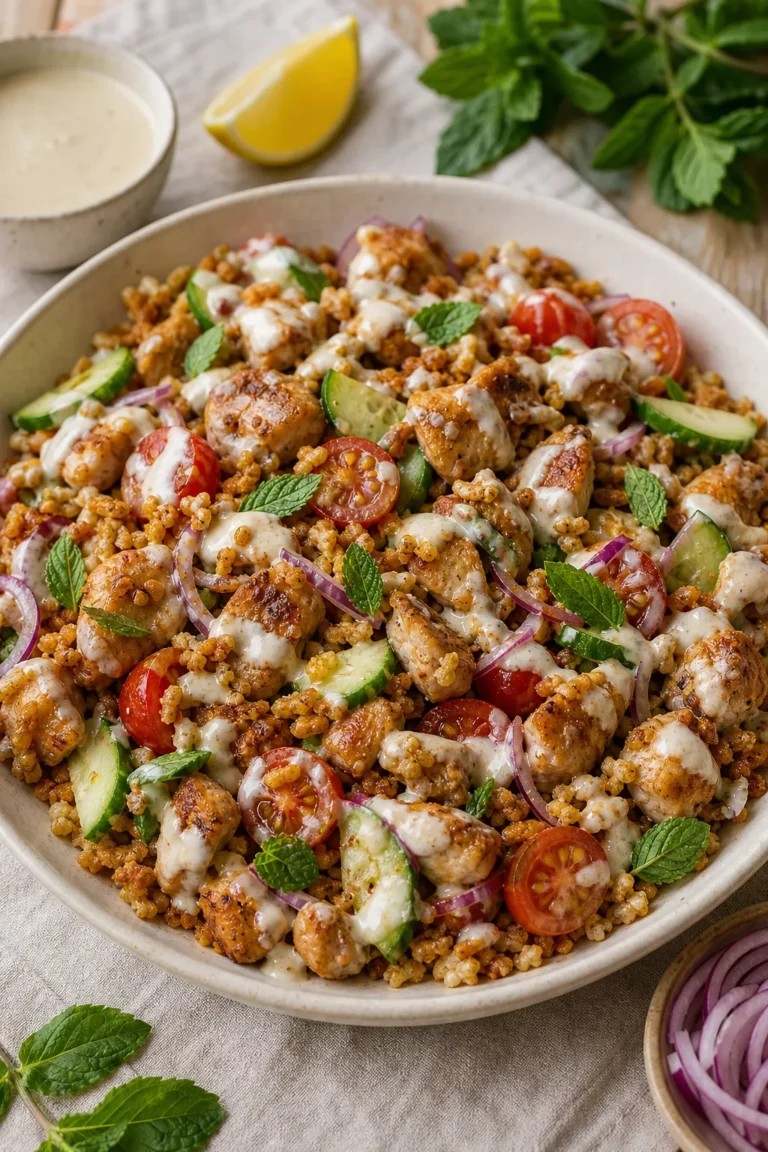 55 min
Tavuklu Çıtır Pirinç Salatası (Crispy Rice Chicken Salad with Lemon-Tahini Dressing)
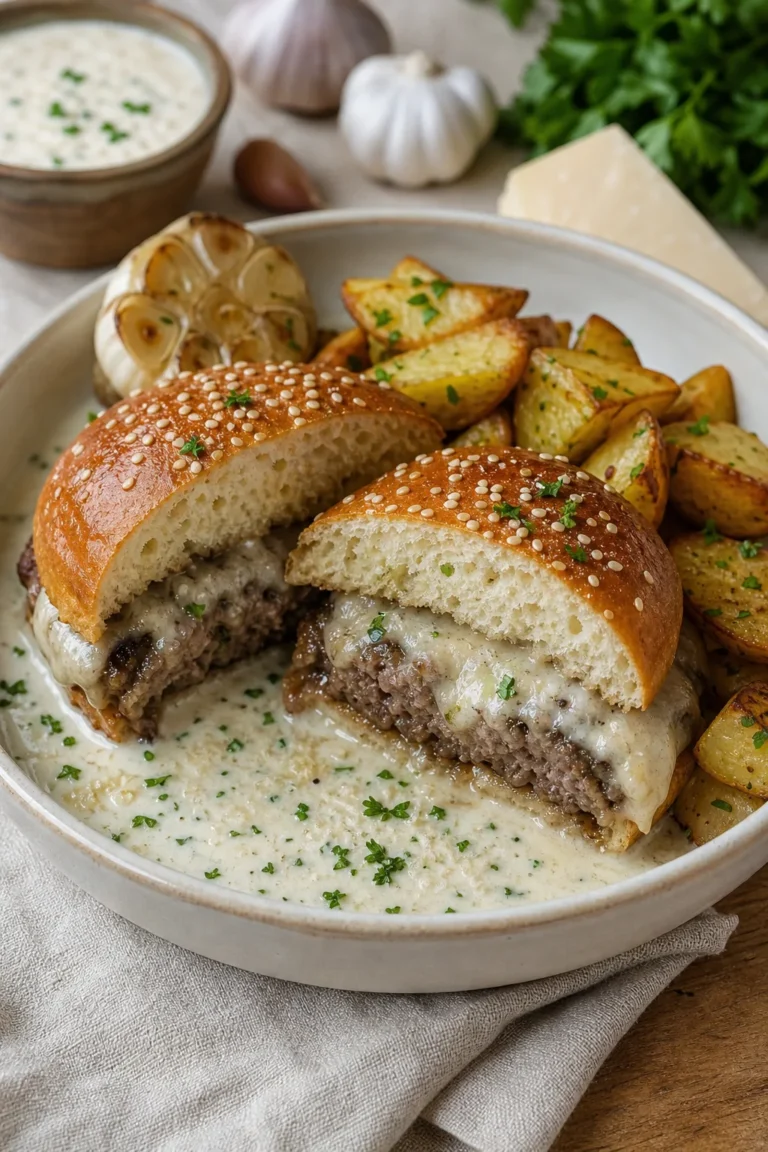 40 min
Garlic Parmesan Sauce Burger Recipe (Sarımsaklı Parmesan Soslu Hamburger)
 1 hr 30 min
Layered Mantı Lasagna Recipe (Turkish Dumpling Lasagna with Beef & Cabbage)
 1 hr 10 min