
Roasted Garlic Haydari (Turkish Strained Yogurt Meze)
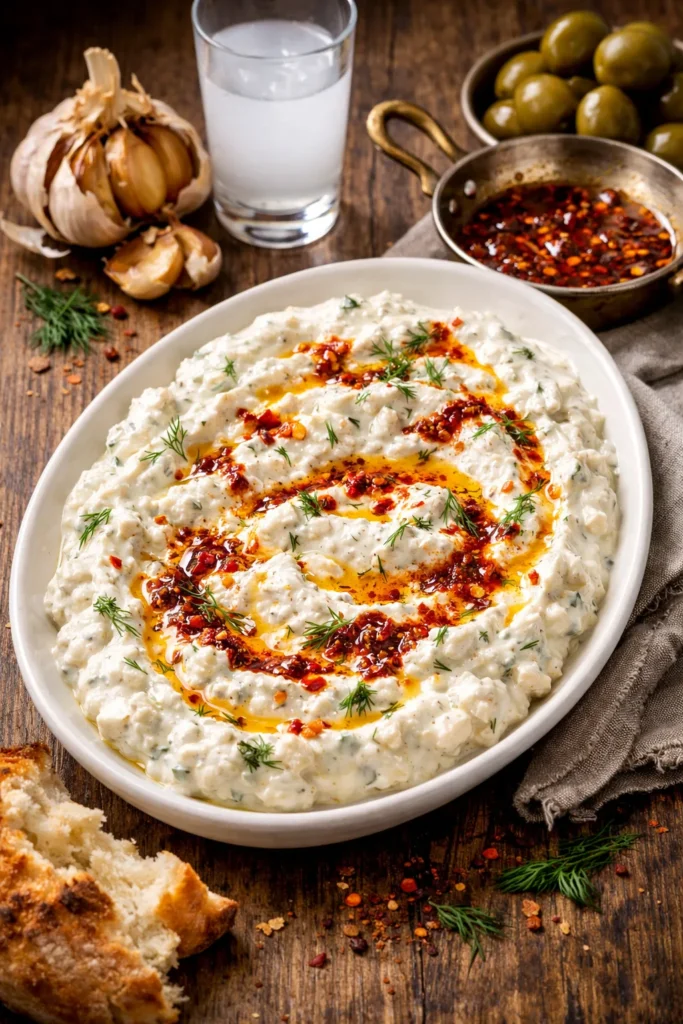
Haydari is one of the most classic yogurt-based meze in Turkish cooking, and it is closely tied to meyhane (Turkish tavern) culture. Made from strained yogurt, white cheese and garlic, this simple but characterful meze is a staple on rakı tables, where it balances the stronger flavors, and over time it has made its way into home kitchens too. What I love about haydari is that it never shows off, yet it makes itself felt on the table with its flavor. Every cook and every home makes it a little differently: some add more garlic, some more cheese. That makes it a meze with a familiar formula that is always open to your own interpretation.
Roasted garlic haydari is a more modern, deeper-flavored take on this classic. Roasting softens the garlic, so instead of a sharp bite the haydari gets a gently sweet, rounded flavor. Haydari shines on evening tables, at long conversations and at crowded gatherings. In summer it is refreshing, and in winter the roasted garlic gives it a warmer character. These days, versions enriched with touches like this are as welcome at the table as the classic one, a rare dish where tradition and something new meet on the same plate.
Why Roasted Garlic Works So Well Here;
Because haydari is built on thick, strained yogurt, it tastes cool and refreshing, which makes it a lovely counterpoint to richer, heavier dishes. Roasting the garlic mellows it, so it adds depth of flavor without the sharp edge of raw garlic. Enjoy it in moderation as part of a varied meze spread.
This content is for informational purposes only and is not medical advice.
Wishing you a meal that leaves a good memory.
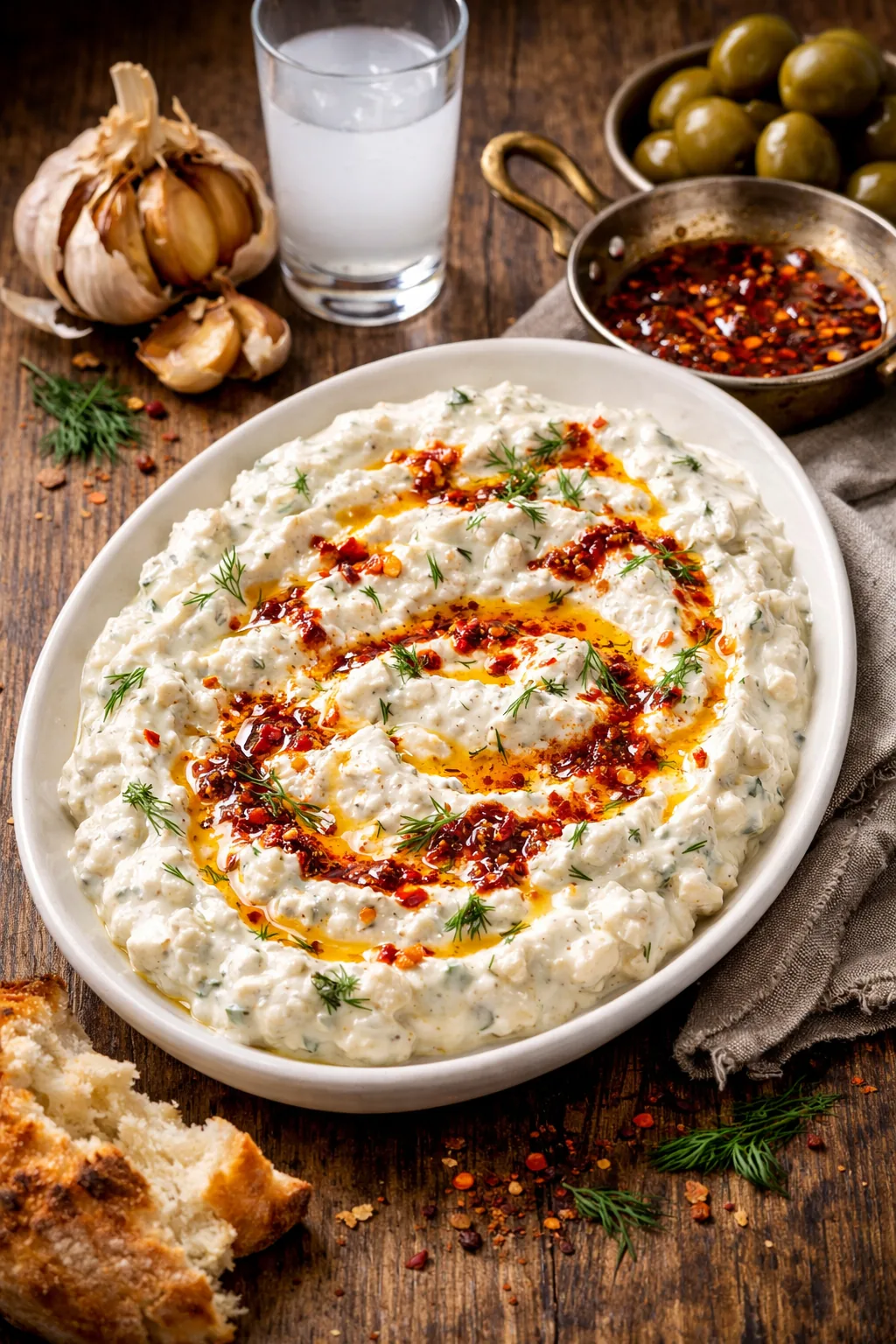
Roasted Garlic Haydari (Turkish Strained Yogurt Meze)
Ingredients
Yapılışı
- Wrap the garlic cloves in their skins, first in parchment paper and then in aluminum foil. Roast in a 200°C (400°F) oven for 15–20 minutes, until soft. Once cool enough to handle, peel off the skins and mash the garlic with a fork.
- Place the strained yogurt in a bowl and stir until smooth. Add the mashed white cheese and the labneh, if using.
- Add the roasted garlic, olive oil, black pepper and salt. Stir until everything is well combined. Taste and adjust the salt if needed.
- Rest the haydari in the refrigerator for at least 15 minutes. This gives the flavors time to settle.
- Transfer to a serving dish. If you like, melt the butter, lightly sizzle it with red pepper flakes, and drizzle it over the top. Finish with dill or thyme.
- 💡 Tip: Roasting the garlic makes the haydari rounded and deeply flavored instead of sharp; that’s the secret of this recipe.
Püf Noktaları
- Strained yogurt is a must: Watery yogurt makes haydari loose; if you can, use yogurt that has been strained overnight.
- Don’t skip the resting time: Haydari that rests for at least 15 minutes has a thicker, more balanced texture and flavor.
- Measurements: 1 cup (Turkish tea glass “su bardağı”) = 200 ml. 1 dessert spoon = 2 teaspoons.
⭐ Have you tried this recipe? Give it a star rating below and tell us how it turned out; your comment helps other readers too.
You May Also Like
- Avocado Yogurt Meze (Creamy Turkish-Style Avocado Yogurt Dip)
- Yoğurtlu Kereviz Salatası (Turkish Celery Root Salad with Yogurt & Walnuts)
- Light, Fresh, Legendary: Girit Mezesi Recipe (Cretan-Style Zucchini & Yogurt Meze)
Frequently Asked Questions About Roasted Garlic Haydari
How do I strain regular yogurt for roasted garlic haydari if I can’t find strained yogurt?
Line a sieve with cheesecloth or a clean thin kitchen towel, set it over a bowl, and spoon in plain full-fat yogurt. Cover and refrigerate for 6 to 8 hours or overnight, until it is thick and spoonable like soft cheese. For this recipe you need about 2 cups (400 ml) of the thickened yogurt, so start with a bit more.
Why is my haydari runny, and how can I fix it?
Runny haydari usually comes from yogurt that still holds too much whey, or from salt drawing out extra liquid. To fix it, stir in the optional tablespoon of labneh or strain the mixture again in a cheesecloth-lined sieve in the fridge for 30 to 60 minutes. Fully mashing the cheese and letting the haydari rest also helps it firm up.
How long does roasted garlic haydari keep in the fridge?
Keep it in an airtight container in the fridge and eat it within 2 to 3 days for the best safety and quality. You can mix it a few hours ahead, but add the sizzled butter and fresh dill just before serving so they stay fresh. If any liquid collects on top, stir it back in or pour it off. Do not freeze it, since yogurt turns grainy when thawed.
Can I make haydari without feta-style white cheese?
Yes, you can swap in another mild, crumbly cheese such as ricotta salata or a soft, lightly salted cheese, or simply leave it out and use a bit more labneh for body. Without the cheese, the haydari will be less salty, so add salt gradually and taste as you go. Keep the amount close to the 2 to 3 tablespoons in the recipe.
Can I roast the garlic without foil or a full-size oven for haydari?
Yes, a toaster oven or air fryer works well. Keep the cloves wrapped in foil or in a small oven-safe dish covered tightly, and roast at about 180 to 200°C (350 to 400°F), checking from 12 minutes on. They are ready when they squeeze out soft and golden, not browned or bitter. Cool them slightly before mashing.
Similar recipes
 55 min
Pembe Sultan (Turkish Beet & Yogurt Salad with Garlic and Walnuts)
 1 hr 15 min
Mercimek Köftesi (Turkish Red Lentil & Bulgur Patties) for Tea Time
 35 min
Tavuklu Şehriye Salatası (Turkish Chicken Orzo Salad) Recipe | Hearty & Easy
 30 min