
Meyhane Pilavı (Turkish Colorful Vegetable Bulgur Pilaf): A Thousand Flavors in One Spoonful
About Meyhane Pilavı
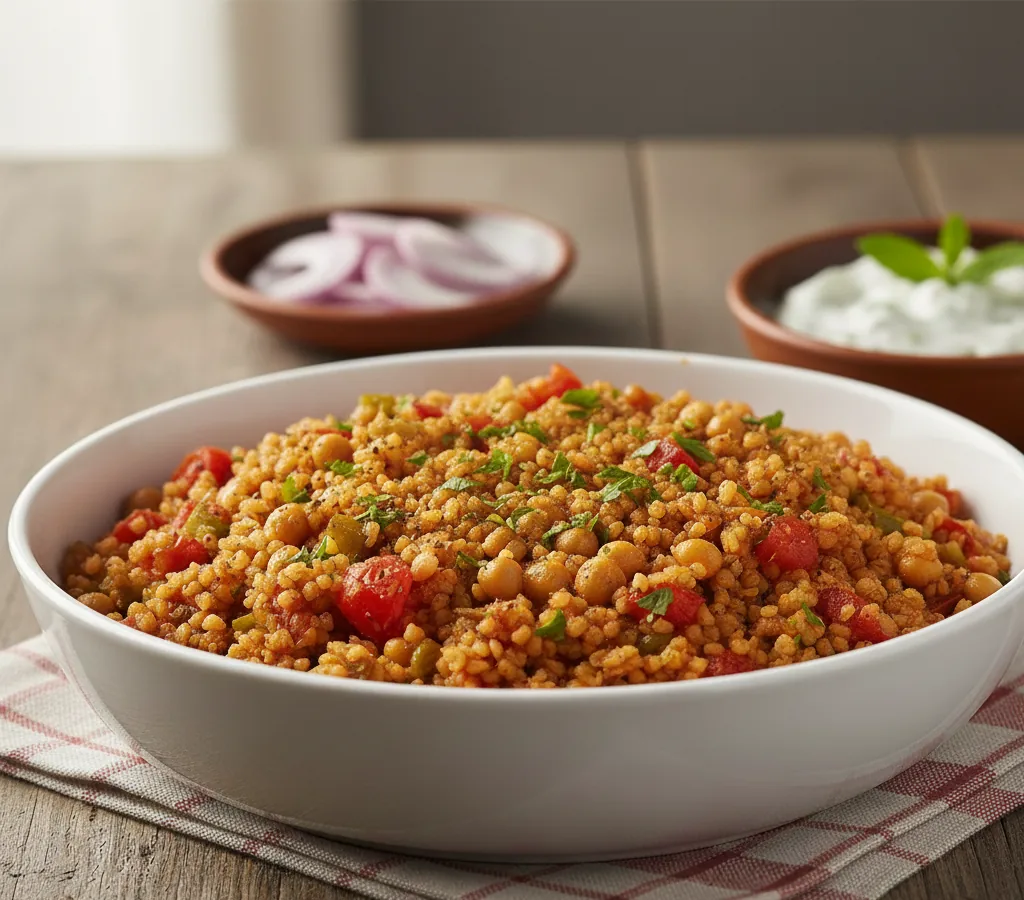
Despite what its name suggests, meyhane pilavı (Turkish tavern-style bulgur pilaf) is one of the humblest, most welcoming home-cooked dishes in Anatolia. The name is said to refer to the abundance and variety of its ingredients and to how tempting its flavor is (“meyli” in Turkish). This pilaf has little to do with the measured discipline of palace cooking. It celebrates the generosity of freshly picked tomatoes and peppers, and of bulgur, the pride of the pantry. The smell that fills the house the moment our mothers set the pot on the stove and start sautéing the vegetables in oil is a promise that nobody will go hungry. This pilaf is cooked not just to fill stomachs, but to warm everyone at the table.
As for the season, meyhane pilavı suits any time of year, but it feels most at home in the last days of summer, in those abundant September days when tomatoes are at their reddest and juiciest. In the old days, it was enriched with dried peppers and cooked-down pastes prepared for winter, and on cold evenings it became the warmest thing in the house. For us today it is simply the plate our mothers made that we could never get enough of. But behind it, I like to think, lies the Anatolian knack for turning whatever is on hand into something special, and that generous spirit of sharing that says, “let’s put in whatever we have and make it a feast.”
Meyhane Pilavı (Turkish Colorful Vegetable Bulgur Pilaf): A Thousand Flavors in One Spoonful
Ingredients
Yapılışı
- Prepare the vegetables: Chop the onion into small pieces. Remove the seeds from the green and red peppers and cut them into thin rings or small cubes. Mince the garlic very finely.
- Start sautéing: Add the olive oil and butter to a wide pot. When the butter melts, add the onions and sauté until translucent. Then add the peppers and keep stirring until they change color and soften.
- Paste and tomatoes together: Add the tomato paste and pepper paste. Sauté for 1-2 minutes, until the raw smell is gone and the color has passed into the oil. Right after that, add the grated (or finely diced) tomatoes and the garlic. Cook until the tomatoes have released some of their liquid and reached a sauce-like consistency.
- Add the bulgur: Add the rinsed and drained bulgur to the pot. Sauté it with the sauce for 2-3 minutes, until every grain is coated. (This step helps the bulgur soak up the flavor.)
- Add the liquid and seasonings: Pour in the hot water (or broth). Add the salt, black pepper, red pepper flakes, and the dried mint, which is a must in meyhane pilavı. If you’re using chickpeas, add the cooked chickpeas at this stage.
- Cook: Cover the pot. Bring it to a boil once, then turn the heat down to the lowest setting. Cook until the bulgur has absorbed all the water and small holes appear on the surface (about 15-20 minutes).
- Rest (the most important moment): Turn off the heat. Lay a paper towel over the pot and close the lid tightly. Let the pilaf rest in its own steam for at least 15-20 minutes.
Püf Noktaları
⭐ Have you tried this recipe? Rate it with stars below and tell us how it turned out. Your comment helps other readers too.
Tips for Making Meyhane Pilavı
Before adding the bulgur, sauté the vegetables and paste well. This is where the color and deep flavor of meyhane pilavı come from. Add the water hot, and once the pilaf has absorbed it, turn off the heat, lay a clean cloth over the pot, and let it rest for 10–15 minutes.
Fluffing the pilaf with a fork after resting keeps the grains from sticking together.
Serving and Storage
Serve meyhane pilavı with yogurt, cacık (Turkish yogurt and cucumber dip), or pickles. It also goes very well alongside köfte (Turkish meatballs) and chicken.
It keeps in a covered container in the refrigerator for 3 days. To reheat, add a few spoonfuls of water and warm it over low heat with the lid on.
You May Also Like
- Pırasalı Bulgur Pilavı (Turkish Leek Bulgur Pilaf) Without Onion
- Şehriyeli Tereyağlı Bulgur Pilavı (Turkish Buttery Bulgur Pilaf with Vermicelli)
- Turkish Rice Pilaf (Pirinç Pilavı) Recipe
Frequently Asked Questions About Meyhane Pilavı
Why did my meyhane pilavı turn out mushy or too firm, and how do I fix it?
Mushy pilaf usually means too much water or too much stirring, while firm, crunchy grains mean too little water or too short a rest. Stay within 3.5 to 4 cups of hot water for 2 cups of coarse bulgur, and use the lower amount if your tomatoes were very juicy. Cook on the lowest heat without stirring, then rest it covered for 15 to 20 minutes. If the grains are still firm, sprinkle in a few spoonfuls of hot water and rest it again.
Can I use fine bulgur for this Meyhane Pilavı recipe?
Fine bulgur is not a good match, because it turns soft and sticky when cooked this way. This recipe is built for coarse pilaf bulgur, or başbaşı bulgur. If fine bulgur is all you have, reduce the water noticeably, start with about 2.5 cups for 2 cups of bulgur, and shorten the cooking time. Check it early, since it absorbs liquid much faster.
What can I use instead of dried mint in meyhane pilavı?
Dried mint gives this pilaf its signature taste, so it is best to find it, but a small amount of dried oregano or a few chopped fresh mint leaves stirred in after resting can stand in. Fresh mint is milder, so use roughly three times the amount. Oregano has a stronger, different flavor, so start with about 1 teaspoon and taste before adding more.
How can I make meyhane pilavı vegan?
Simply replace the tablespoon of butter with an extra tablespoon of olive oil and use water or vegetable broth instead of meat or chicken broth. The pilaf will have slightly less shine, but the vegetables, pastes, and mint still carry plenty of flavor. Adding the optional cup of cooked chickpeas makes it more filling and keeps it fully plant-based.
Can I freeze meyhane pilavı or prepare it ahead for guests?
Yes, you can freeze it, though the texture will be a little softer after thawing. Cool it quickly, portion it into airtight containers, freeze for up to about 2 months, and thaw it in the refrigerator before reheating. To prepare ahead without freezing, sauté the vegetables and pastes up to a day early and refrigerate them, then add the bulgur and water just before cooking.
Similar recipes
 1 hr
Dubai Chocolate Kadayif Cups (Pistachio Cream, No-Bake)
 4 hr 30 min
Light as a Cloud: Perfectly Creamy Ladyfinger Tiramisu (Kedidilli Tiramisu)
 1 hr 55 min
Lahana Sarması (Turkish Stuffed Cabbage Rolls), Wrapped with Patience and Eaten with Love
 15 min