
Carrot Revani with Walnuts & Hazelnuts (Havuçlu Revani, Turkish Semolina Syrup Cake)
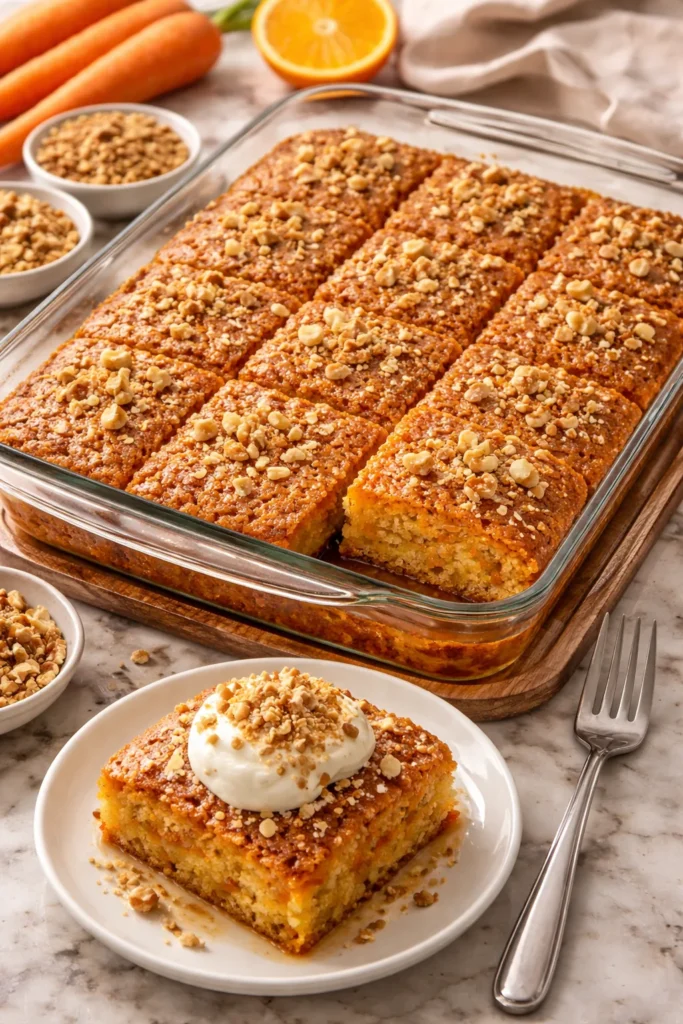
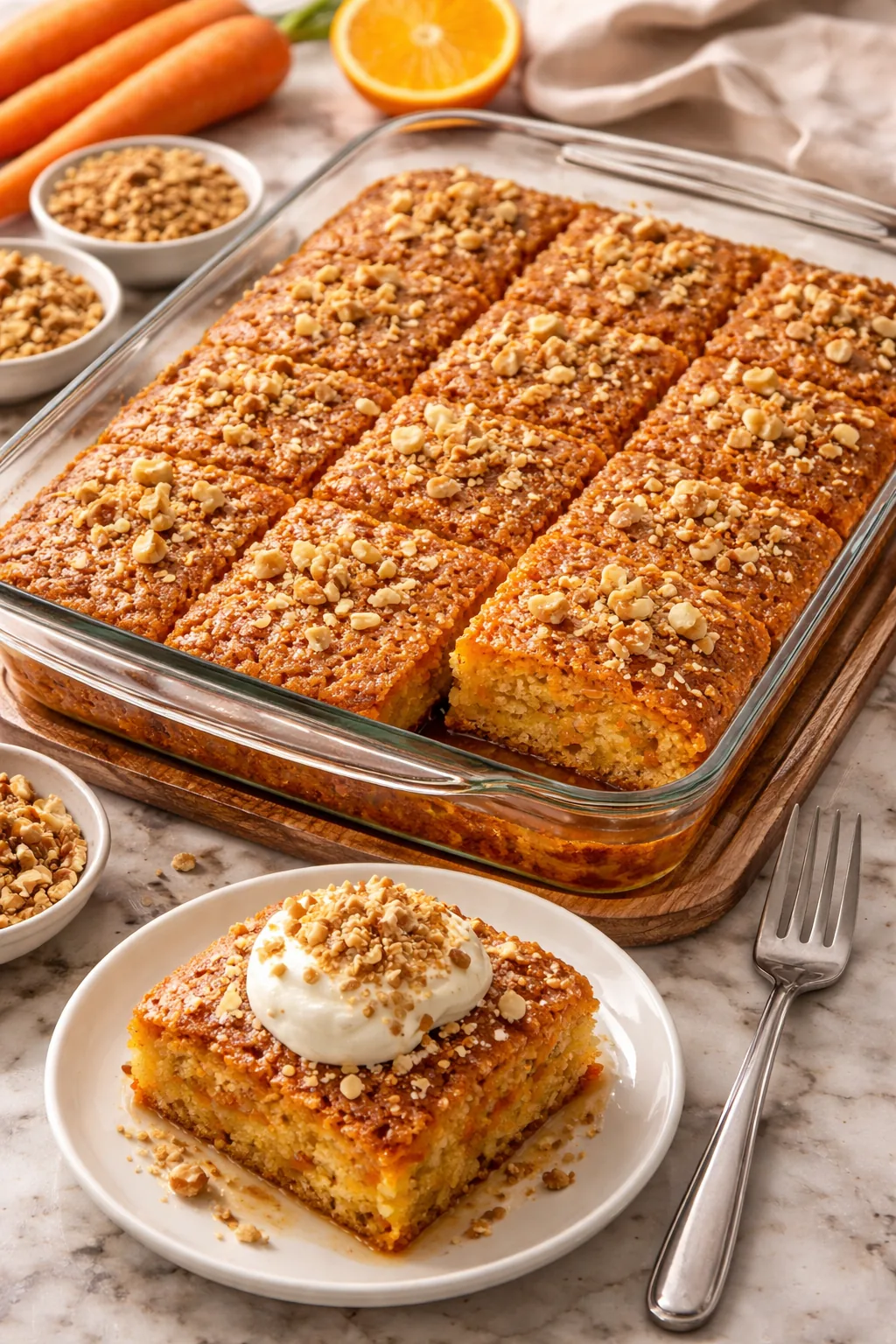
Walnut & Hazelnut Carrot Revani (Havuçlu Revani)
Ingredients
Yapılışı
- Put 2.5 cups sugar and 3 cups water in a pot and bring to a boil.
- Once it boils, let it simmer over medium heat for 10 minutes.
- Add 2-3 drops of lemon juice, boil for 1 more minute, then turn off the heat.
- Let the syrup cool completely.
- Preheat the oven to 180°C (350°F). Grease the baking pan (you can line it with parchment paper if you like).
- Whisk the 3 eggs and 1 cup sugar for 3-4 minutes, until light and foamy.
- Add 1 cup yogurt and 1/2 cup oil and mix briefly.
- In a separate bowl, combine 1 cup semolina, 1 cup flour, the baking powder, vanillin, cinnamon and a pinch of salt, then add this to the batter.
- Add the grated carrots.
- Add the walnuts and hazelnuts (if you like, toss them lightly with 1 dessert spoon of flour first) and fold in with a spatula.
- Pour the batter into the pan and smooth the top.
- Bake for 30-35 minutes. (A toothpick should come out clean.)
- Once the cake comes out of the oven, let it sit for 2-3 minutes so the initial heat settles.
- Slowly ladle the cold syrup over the hot or warm cake.
- Let it rest for 2-3 hours so it absorbs the syrup.
Püf Noktaları
⭐ Did you try this recipe? Give it a star rating below and tell me how it turned out; your comment helps other readers too.
The Story of Revani:
Revani is one of the best-known members of the long tradition of syrup-soaked desserts that reaches us from Ottoman cuisine. Its name is generally believed to come from a dessert made in the palace kitchens after the Ottoman Revan (today’s Yerevan) campaign in the 16th century, said to have been prepared “in honor of Revan.” Because it is semolina-based, it was both affordable and filling, so over time it spread from the palace to home kitchens and found a place in nearly every region of Anatolia. The most distinctive feature of classic revani is its soft texture, paired with a simple but well-balanced syrup.
Carrot revani is one of the modern, home-style takes on this old recipe. In Anatolian cooking, carrots became common in cakes and desserts later on, and they are used because they bring natural sweetness, color and moisture. Adding walnuts and hazelnuts reflects the influence of both Black Sea and Central Anatolian food culture, and makes the dessert richer and more aromatic. This version is especially nice in autumn and winter, at tea time or on a table full of guests, and it can win over even people who usually keep their distance from syrupy desserts. To me it is a warm home dessert that brings the past and the present together.
A Note on Enjoying Carrot Revani:
Carrot, walnut and hazelnut revani gets its natural flavor from the carrots and its richness and crunch from the walnuts and hazelnuts. Since it is a syrup-soaked dessert, though, it is high in sugar and calories, so it is best enjoyed in sensible portions, especially if you are watching your blood sugar or your weight. I think it is a treat to savor now and then as part of a balanced way of eating.
This content is for informational purposes only and is not medical advice.
You May Also Like
- Kalburabastı Recipe (Turkish Lemon Walnut Syrup Cookies)
- Foolproof Revani (Turkish Semolina Cake in Syrup) with Perfect Measurements
- Haşhaşlı Revani (Turkish Poppy Seed Semolina Cake in Syrup): A Step Beyond the Classic
Frequently Asked Questions About Havuçlu Revani
How long does carrot revani keep, and does it need to go in the fridge?
Keep it covered at cool room temperature for up to a day, then refrigerate it. Because it is soaked in syrup and contains yogurt, eggs and carrots, it is safest to eat it within about 3 days. Let slices sit out for a few minutes before serving so the texture softens again.
Can I freeze Havuçlu Revani, and how do I thaw it?
Yes, you can freeze it, though the texture is a little softer afterward. Cut it into portions, wrap them tightly and freeze for up to about 1 month. Thaw the slices overnight in the fridge, then bring them to room temperature before serving.
Why did my carrot revani turn out soggy or heavy instead of soft?
Usually the syrup and cake temperatures were mismatched, or the syrup was poured too fast. The syrup should be completely cold and the cake hot or warm, and you should ladle it on slowly. Also check that the cake is baked through (a toothpick comes out clean) and that you measured the semolina and flour with the 200 ml cup.
What size pan should I use for this revani, and how do I cut it?
A medium rectangular baking pan, roughly 22×30 cm (9×12 inches), works well for this amount of batter and gives about 10 servings. Let the cake rest the full 2-3 hours so it absorbs the syrup, then cut it into squares or diamonds. A sharp knife dipped in hot water gives cleaner edges.
Can I swap the yogurt or oil in carrot revani?
Yes, with small adjustments. Use the same amount of plain yogurt in place of the original, and keep it unsweetened. For the oil, a neutral oil like sunflower is best; melted butter also works, but the crumb will be slightly firmer and richer. Avoid cutting the amounts, since they keep the cake moist under the syrup.
Similar recipes
 9 hr 45 min
Honey Cocoa Spartak Pasta (Turkish Layered Cake, Homemade)
 1 hr 30 min
Volkan Kek (Turkish Chocolate Volcano Cake with Molten Chocolate Sauce)
 1 hr 50 min
Mini Köstebek Pasta (Individual Turkish Mole Cakes with Banana & Cream)
 43 min