
Mor Lahana Turşusu (Turkish Pickled Red Cabbage) Recipe
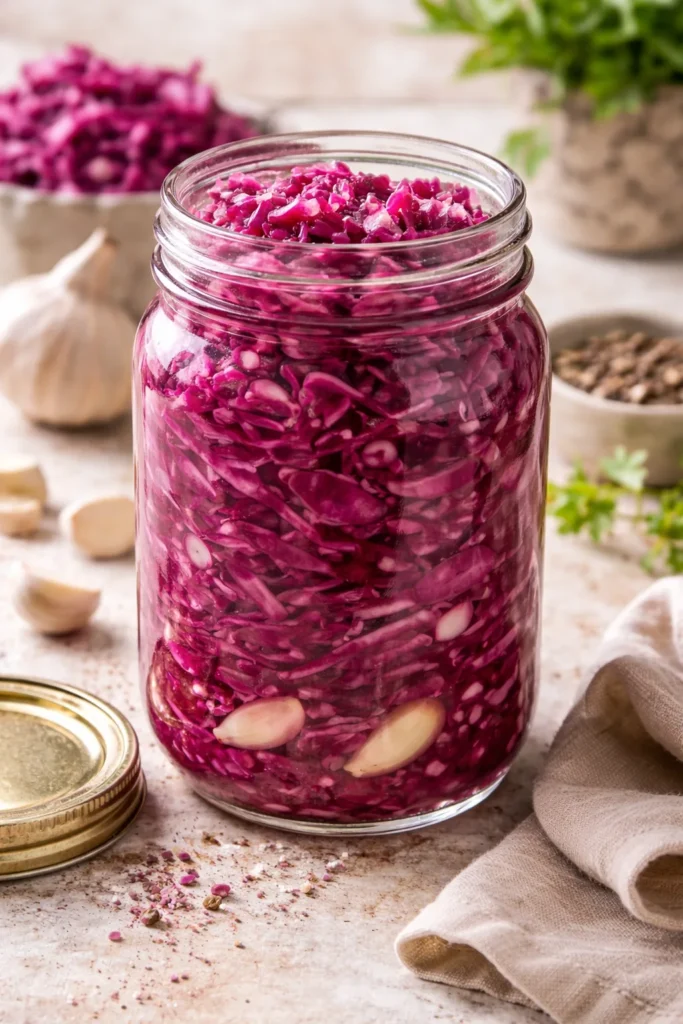
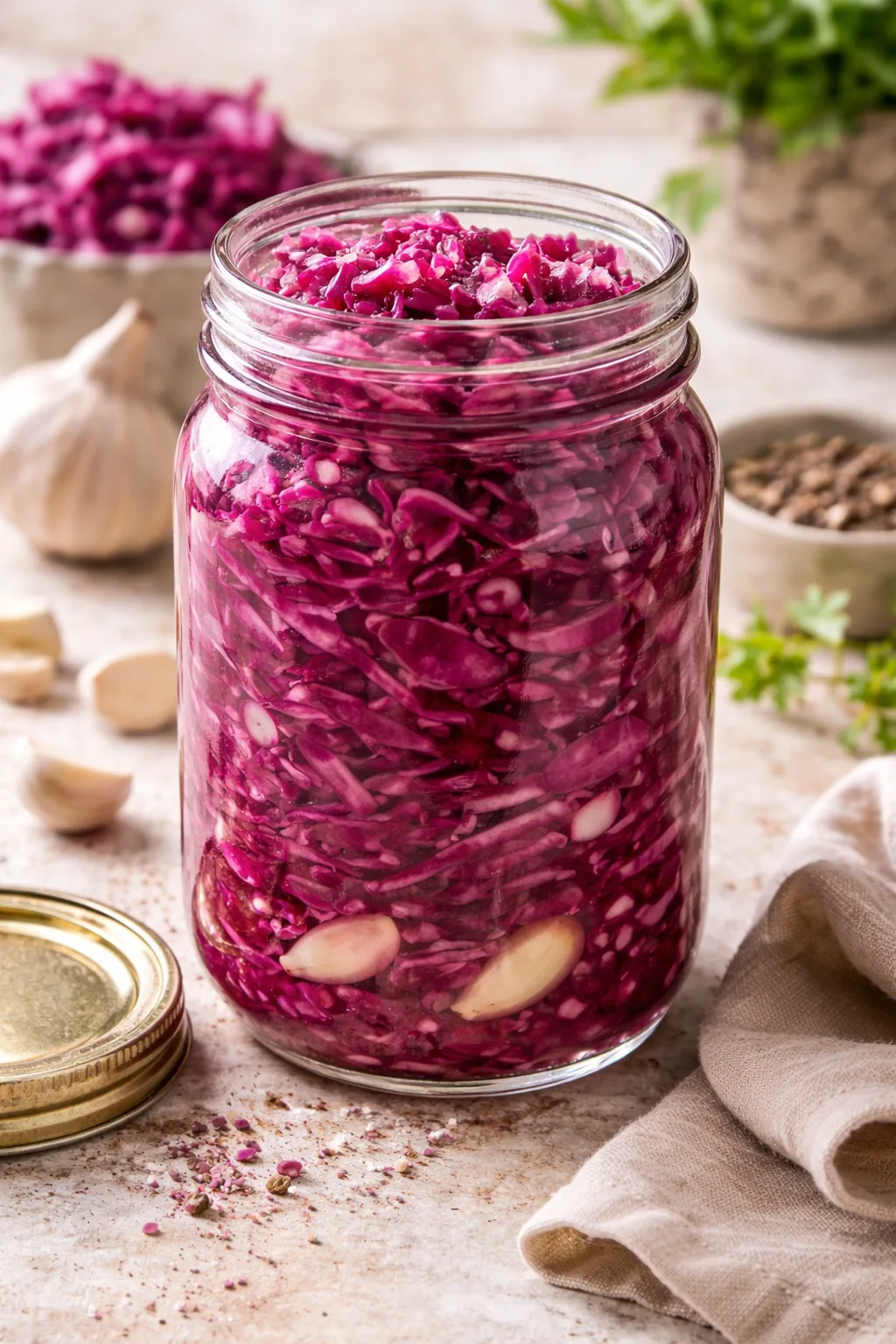
Mor Lahana Turşusu (Turkish Pickled Red Cabbage)
Ingredients
Yapılışı
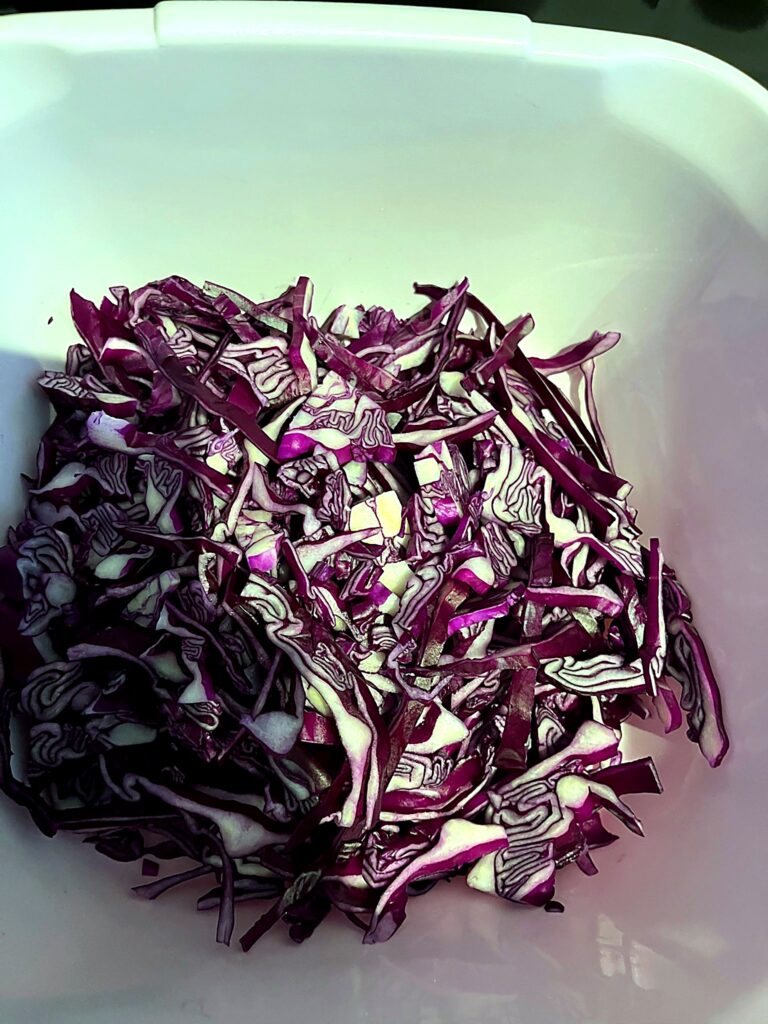
- Cut the cabbage: Chop the red cabbage into large pieces and remove the thick ribs.
- Rub with salt: In a large bowl, rub the cabbage with the rock salt for 3–4 minutes. It softens and starts to release its liquid.
- Fill the jar: Put the garlic cloves at the bottom of the jar, then fill it with the cabbage, pressing it down firmly.
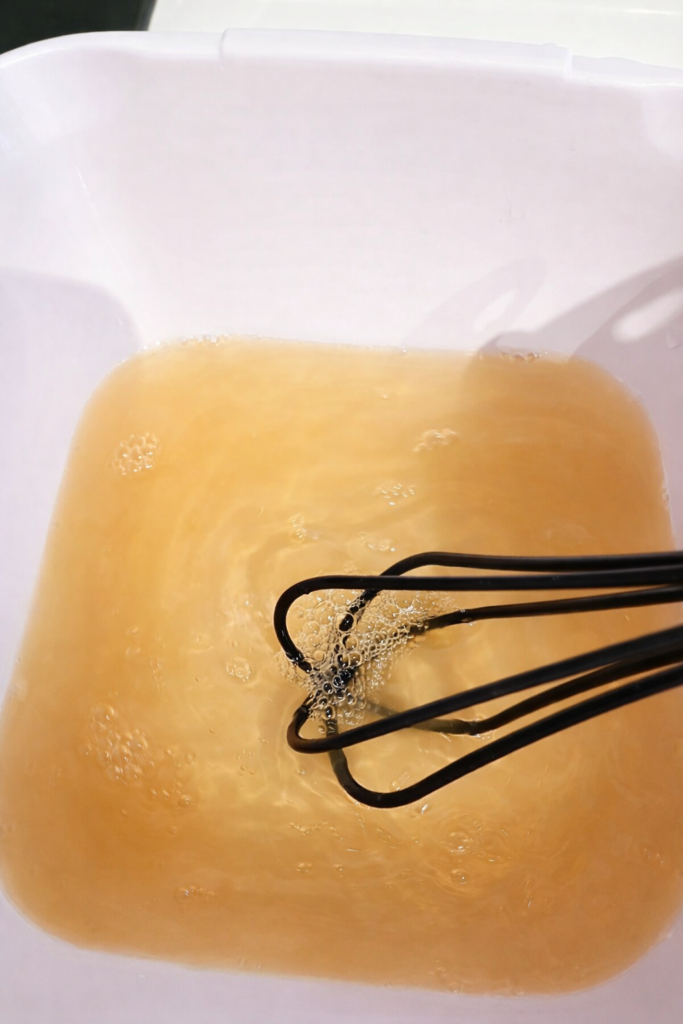
- Make the brine: Mix the vinegar, water, citric acid (and/or lemon juice) and the optional sugar.
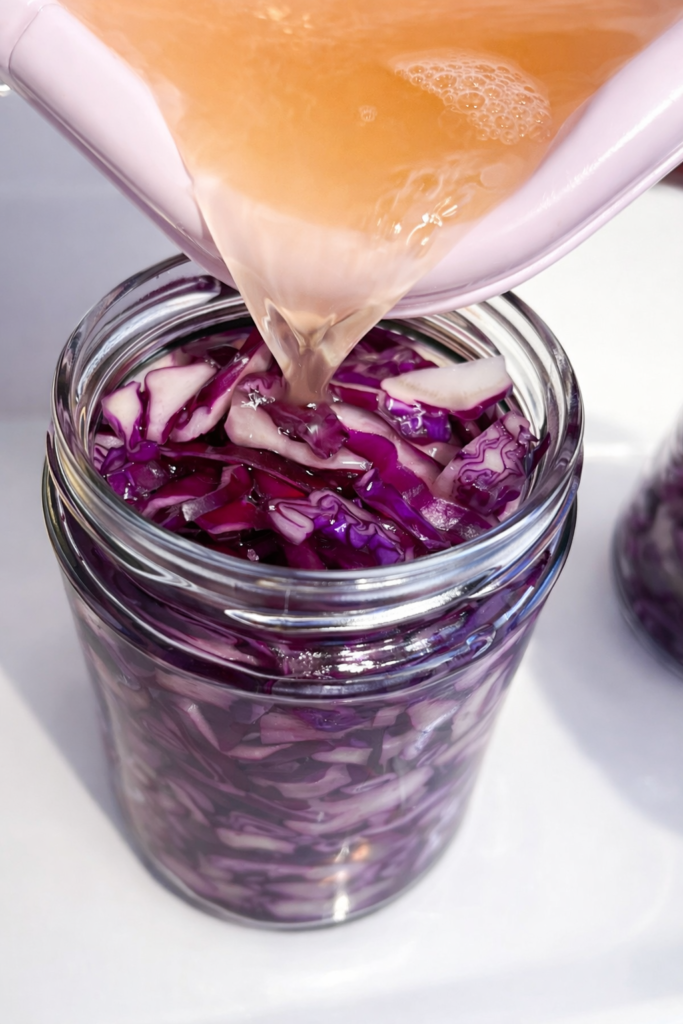
- Top it off: Pour the mixture into the jar so the cabbage is completely under the liquid. Add a little more water if needed.
- Weigh it down: Place a small clean lid, stone or similar weight on top to keep the cabbage submerged.
- Let it rest: Close the lid. Leave at room temperature for 2–3 days (gently shake the jar once a day), then move it to the refrigerator.
- Serve: For the best texture, start eating it after 5–7 days.
Püf Noktaları
- If the cabbage rises above the liquid, it will soften, so be sure to press it down and keep it submerged.
- Iodized salt can soften the pickle; coarse rock salt works better.
⭐ Did you try this recipe? Give it a star rating below and tell us how it turned out; your comment helps other readers too.
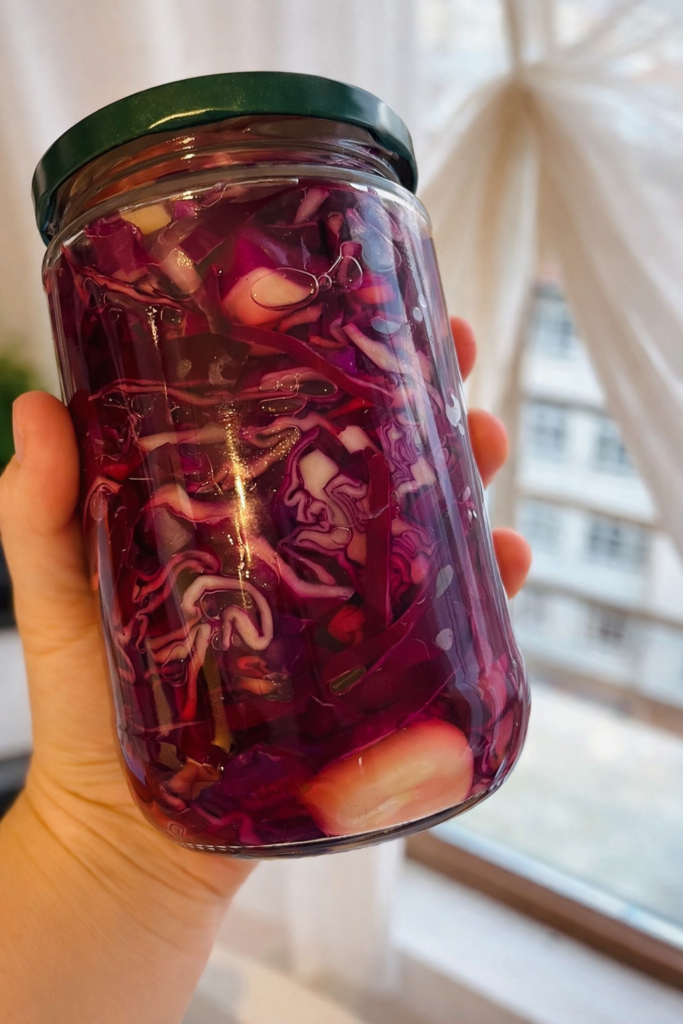
The Story of Mor Lahana Turşusu (Turkish Pickled Red Cabbage);
Rather than a recipe with a single person or a single starting point, I like to think of mor lahana turşusu as a modern, colorful extension of the Turkish pickling tradition. Pickling is a long-standing kitchen habit built on keeping vegetables for a long time with salt, acid (vinegar or lemon) and sometimes natural fermentation, and in Anatolia it has been a staple of winter preparations for generations. Cabbage is one of the vegetables that takes to pickling best: it stays crunchy, and its flavor settles and deepens as the days go by.
Today’s popular red cabbage pickle is a more practical version of the cabbage and fermented-vegetable culture often seen across the Balkans, Eastern Europe and Anatolia, brought into the city kitchen and served as a little side or meze-style addition to salads. In Turkey it is common on winter tables next to meat and chicken dishes as a balancing bite, and it is also used in salads, in dürüm wraps and sandwiches, and on meze plates. It carries the spirit of winter preparations, and at the same time it has become a quick way to add color and appetite-whetting tang to the table.
A Note on Enjoying Red Cabbage Pickle;
Red cabbage pickle is a tangy, crunchy winter favorite that is easy to add to salads and meals. Because it is salty, I enjoy it in moderation, as a small spoonful alongside a dish rather than a big portion.
This content is for informational purposes only and is not medical advice.
You May Also Like
- Quick Pancar Turşusu (Turkish Pickled Beets) Recipe
- Red Cabbage Pickle Winter Salad (Mor Lahana Turşulu Kış Salatası)
- Lahana Sarması (Turkish Stuffed Cabbage Rolls), Wrapped with Patience and Eaten with Love
Frequently Asked Questions About Mor Lahana Turşusu
How long does mor lahana turşusu keep in the fridge?
For the best taste and texture, plan to finish it within about 2 to 3 weeks of moving it to the fridge. The brine here is half water, so it is milder than a strong vinegar pickle. Keep the cabbage fully under the liquid, close the lid tightly, and always use a clean spoon or fork.
Can I use white vinegar or lemon juice instead of grape vinegar in red cabbage pickle?
Yes, apple vinegar is already suggested, and plain white vinegar of similar strength also works. Keep the same 1 cup vinegar to 1 cup water ratio. Lemon juice or citric acid is only an add-on for extra tang, so don’t use it to replace all of the vinegar, since that lowers the acidity of the brine.
Why did my red cabbage pickle turn bright pink or bluish purple?
Red cabbage’s natural pigment changes color with acidity. A well-acidified brine turns it bright pink-red, while a milder brine or very alkaline tap water can push it toward purple or blue. This is normal and harmless if the smell is fresh. The citric acid or lemon juice in the recipe helps keep the color vivid.
How can I tell if my mor lahana turşusu has gone bad?
Throw it out if you see fuzzy or colored mold, a slimy texture, or a foul or rotten smell. Slightly cloudy brine in the first few days is usually normal. Mold most often appears on pieces that rose above the liquid, so keep everything submerged. Don’t scrape the mold off and eat the rest.
Can I eat mor lahana turşusu before the 7 days are up?
Yes, after the 2 to 3 days at room temperature and a day or so in the fridge, it will already be tangy and tasty. The flavor will be sharper and less balanced, though. Waiting the full 5 to 7 days gives the best texture and a more settled taste, so keep it refrigerated while it rests.
Similar recipes
 1 hr 55 min
Russian Salad Recipe – Rus Salatası (Homemade Mayo, Pickles & Peas)
 19 min
Sahlep Recipe (Turkish Hot Salep Drink with Cinnamon)
 40 min
Tarhana Çorbası Recipe (Turkish Tarhana Soup with Mint Butter)
 50 min