
Nohutlu Ekşili Bamya (Turkish Sour Okra & Chickpea Stew)
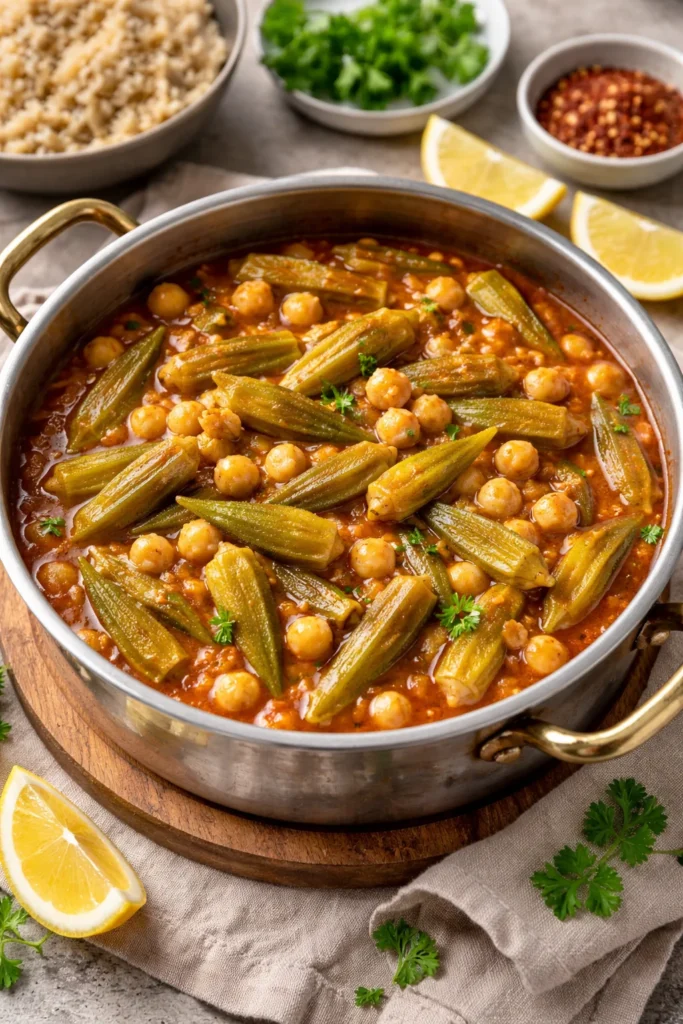
Nohutlu ekşili bamya (okra and chickpea stew with a sour note) is one of the deeply rooted, patient dishes of Anatolian home cooking. Okra is a special vegetable: we cook it fresh in the summer months, and frozen or dried in winter. Adding chickpeas makes the dish more filling and pairs vegetables with legumes in a well-balanced way. The sour flavor comes from lemon, verjuice (koruk), or pomegranate molasses, and it balances okra’s distinctive texture and gives the dish its character.
Traditionally, nohutlu ekşili bamya shows up on the table more often in late summer, fall, and winter. Made with fresh okra, it feels light like a summer dish; made with frozen or dried okra, it becomes a warming winter pot meal. It is also a common choice among the dishes prepared before holidays (bayram), because the flavor settles as it rests and it suits a crowded table easily. With its homey aroma, sour tang, and simple character, it is a classic Anatolian dish that fits any season.
Why I Like Nohutlu Ekşili Bamya;
Thanks to okra, which contains fiber, chickpeas, a plant-based source of protein, and olive oil, nohutlu ekşili bamya is a balanced and hearty home-style dish. The chickpeas keep you full for a long while, and the lemon or pomegranate molasses freshens the stew and gives it an appetizing balance. Because it is light, especially when cooked in the olive oil style, it doesn’t sit heavy. In moderate portions, it is an easy way to bring more vegetables and legumes to your table.
This content is for informational purposes only and is not medical advice.
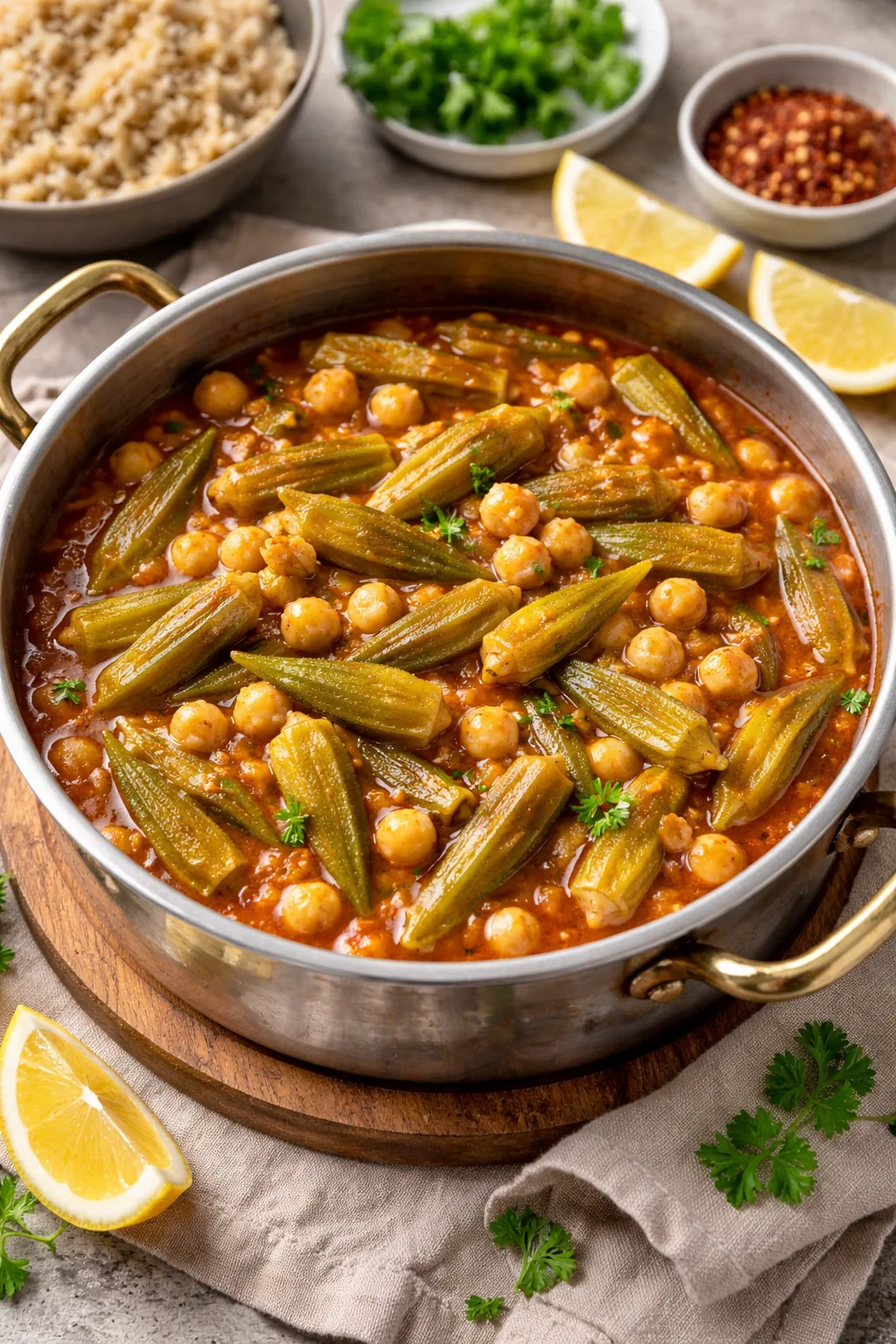
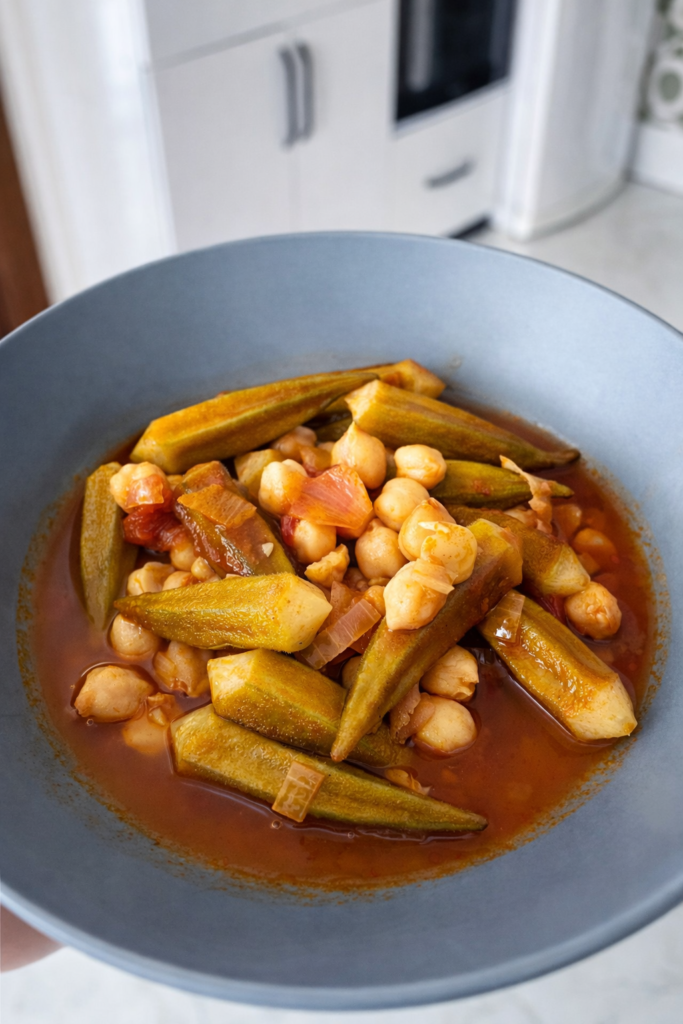
Nohutlu Ekşili Bamya (Turkish Sour Okra & Chickpea Stew)
Ingredients
Yapılışı
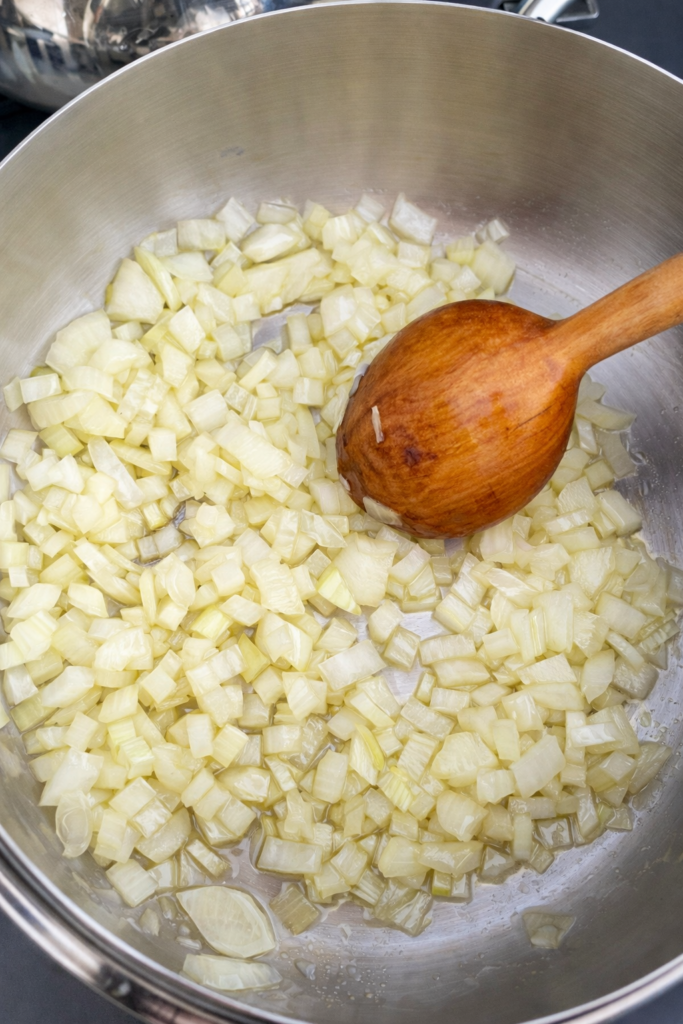
- Add the olive oil to a pot, add the finely chopped onion, and sauté until it turns pink.
- Add the tomato paste and keep sautéing briefly until it smells fragrant.
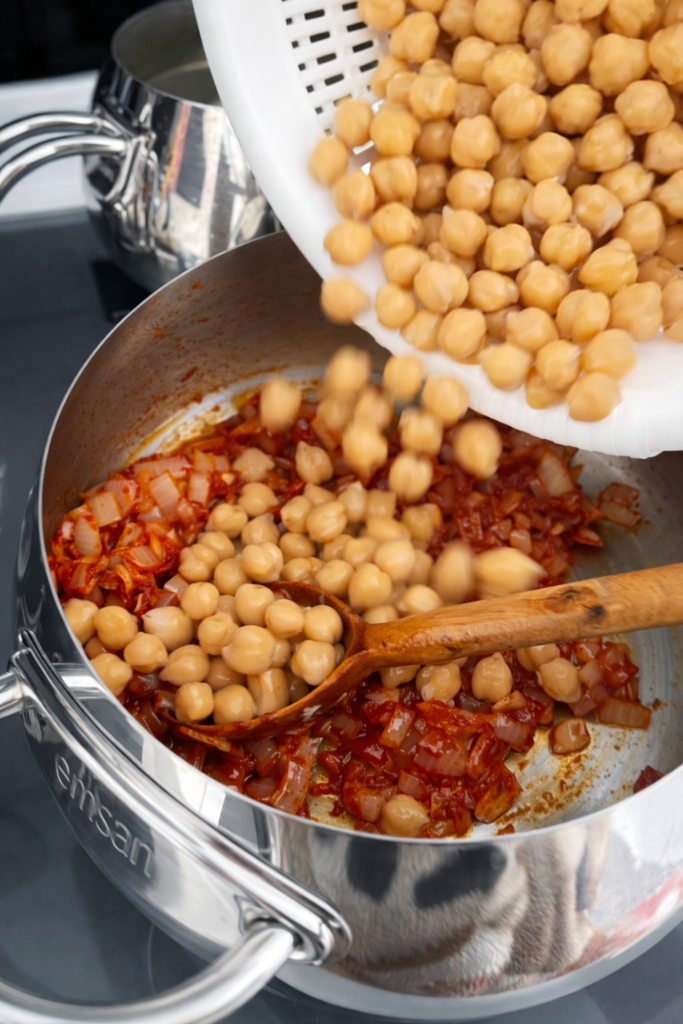
- Add the cooked chickpeas to the pot and stir for 1–2 minutes.
- If the okra is fresh, wash it and trim the stem ends; if it’s frozen, add it straight to the pot without thawing.
- Add hot water, the salt, the black pepper, and the sugar if using.
- Cover the pot and cook over medium heat for 25–30 minutes, until the okra is tender.
- Near the end of cooking, add the lemon juice (or pomegranate molasses) and let it come to a boil once more.
- Take the pot off the heat and let it rest, covered, for 10–15 minutes.
Püf Noktaları
⭐ Have you tried this recipe? Leave a star rating below and tell me how it turned out; your comment helps other readers too.


You May Also Like
- Ekşili Kuru Bamya Yemeği (Tangy Dried Okra Stew with Lentils & Black-Eyed Peas)
- Turkish Stuffed Onions (Ekşili Soğan Dolması) with Pomegranate Molasses
- Toad in the Hole (Çukurdaki Kurbağa): The English Sunday Classic with Sausages
Frequently Asked Questions About Nohutlu Ekşili Bamya
Can I use canned or dried chickpeas in Turkish okra and chickpea stew?
Yes, both work. Drain and rinse canned chickpeas, then use about 1 cup (200 ml), which is roughly one standard can. If you start with dried chickpeas, soak and boil them until tender first, since they won’t soften properly in the 25-30 minute simmer with the okra.
How long does nohutlu ekşili bamya keep in the fridge?
Store it in an airtight container in the fridge for up to 3 days. Let it cool to room temperature, but not for more than about 2 hours, before refrigerating. Reheat gently over low heat until steaming hot, adding a splash of water if the sauce has thickened.
Can I freeze okra and chickpea stew?
Yes, you can freeze it for up to 2 months, though the okra will be a little softer after thawing. Cool it fully, portion it into containers, and thaw overnight in the fridge. Reheat slowly without stirring much, so the okra holds together.
Should I use lemon juice or pomegranate molasses in Turkish sour okra stew?
Either works, and it comes down to taste. Lemon gives a bright, clean sourness, while pomegranate molasses adds a deeper, slightly sweet tang. Start with the lower amount in the recipe, taste after the final boil, and add more a little at a time. If you find it too sharp, the optional teaspoon of sugar softens it.
What can I serve with nohutlu ekşili bamya?
It pairs well with plain rice pilaf, bulgur pilaf, or crusty bread to soak up the sauce. A side of yogurt or a simple salad of tomato and onion adds freshness next to the sour notes. Since it is cooked in olive oil, it also tastes great served warm or at room temperature.
Similar recipes
 50 min
Tini-Style Baked Mac and Cheese (Fırında Peynirli Makarna) Recipe
 45 min
Sweet Potato Peanut Butter Curry Recipe (Tatlı Patatesli Fıstık Ezmeli Köri)
 55 min
Chili Con Carne Recipe (with Ground Beef and Beans)
 1 hr 40 min